Today 24 / 11 was born
- Christoph Willibald Gluck · 1714, 312 years ago
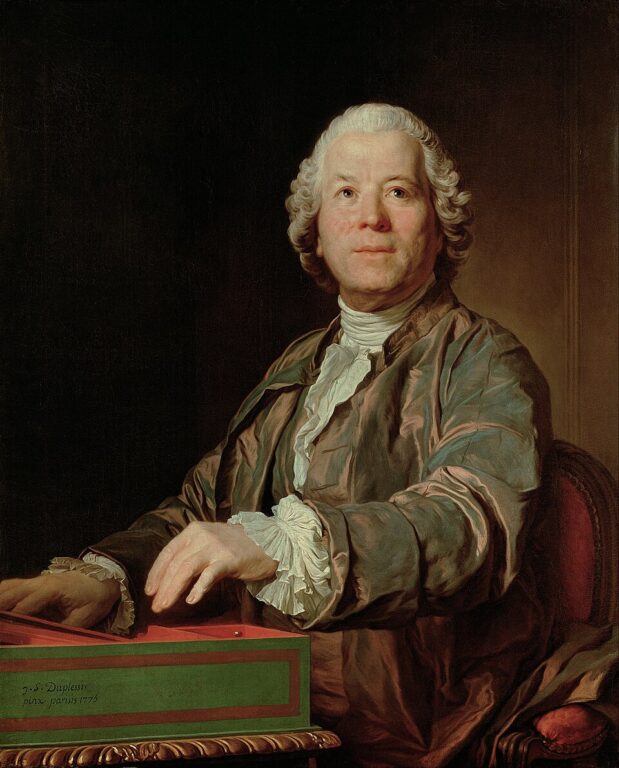
Classification · German and Austrian area
1714 – 1787
Erasmus (Bavaria) - Vienna
Review
After training in Prague and Italy and composing Italian-style operas by half of Europe, Gluck was established in Vienna. There, along with the librettist Ranieri de 'Calzabigi, he undertook a profound reform of the opera: to eliminate the vocal excesses and to put the music at the service of drama.
Orpheus ed Euridice (1762) was the first fruit of this reform, and the preface of Alceste (1767) its manifesto. In Paris his French operas unleashed the famous «I want her.» between gluckists and Pickini supporters. Its influence reached Mozart, Berlioz and Wagner.
Son of a ranger, he escaped home to study music and formed in Prague and Milan, where he was a student of Sammartini. Before its reform, it went through London, Copenhagen, Dresden and other cities with opera companies. In Vienna he was a master of music of the imperial and protected family of Maria Antonieta, who opened the doors of Paris.
His music seeks the «noble simplicity»: clear melodies, choirs and dances integrated into the action and an orchestra that accompanies the drama instead of showing. The scene of Orpheus in the Champs-Elysées and his lament «Che farò senza Euridice» are some of its most famous moments. These are his main works:
I can INTEREST you.

Listen to it live
Next concerts with works by Christoph Willibald Gluck at Spain
- Sat28NovVéronique Gens: «Queens»Véronique gens (soprano) · Ensemble Les Surprises · Louis-Noël Bestion de Camboulas, director19: 30. · Kursaal Auditorium · San Sebastián
- Sun13DecAtenea Quartet and Silvia TroSilvia Tro Santafé, mezosoprano · Julian Reynolds, piano and key · Atenea Quartet19: 30. · Auditori i Palau de Congressos de Castelló · Castellón

