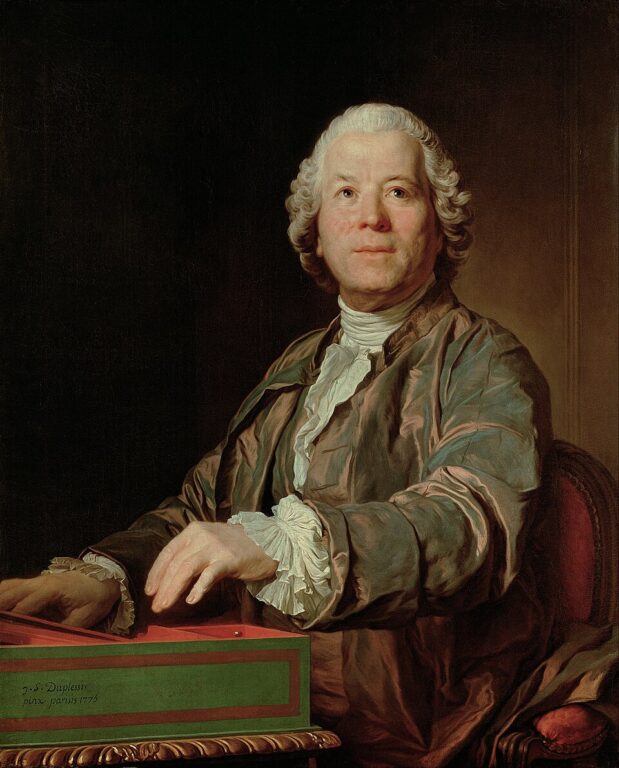
Christoph Willibald Gluck · Classification
1714 – 1787
1762 · Opera · Vienna (French version, Paris 1774)
Tonality
Without a unique tone. Like every opera, it goes through a lot of tonalities. The famous aria «Che farò senza Euridice» is in major.
Instruments
- 2 flutes
- 2 oboes and 2 English corns
- 2 chalumeaux
- 2 fages
- 2 cornet (cornetti)
- 2 tubes and 2 trumpets
- 3 thrombons
- Timbals
- Arpa (the Orpheus lira)
- Row
- Key (continuous)
From the atril
With a libretto by Ranieri de 'Calzabigi, Orpheus ed Euridice It premiered in Vienna in 1762 and was the first fruit of the Gluck reform: a simple story, without secondary entanglement, with choirs and dances integrated into action and arias that express true emotions rather than display virtuosism. The role of Orpheus was sung by Gaetano Guadagni. In 1774 Gluck made a French version for Paris, with Orpheus for tenor and new music.
From the pit, two moments stand out. At the scene of the hell, the Furies respond with a «No!» increasingly weak to the pleas of Orpheus, accompanied by the harp, to let it pass: a great dramatic dialogue. And in the Champs Elysées, the Dance of the blessed spiritswith its flute solo in re minor added in the Paris version, it is one of the most serene pages of music. The aria Che farò senza Euridice It is famous for its heartbreaking simplicity.
What to hear
- The «No!» of the Furies in front of Orpheus.
- The Dance of the blessed spirits And his flute solo.
- The aria Che farò senza Euridice.
Listen
Gluck - Orphée et Euridice (Juan Diego Flórez, Christiane Karg, Fatma Said) | Full Opera (2018) · WOMO MUSIC
When you press the YouTube player will be loaded.

