Today 24 / 11 was born
- Heinrich Schütz · 1585, 441 years ago
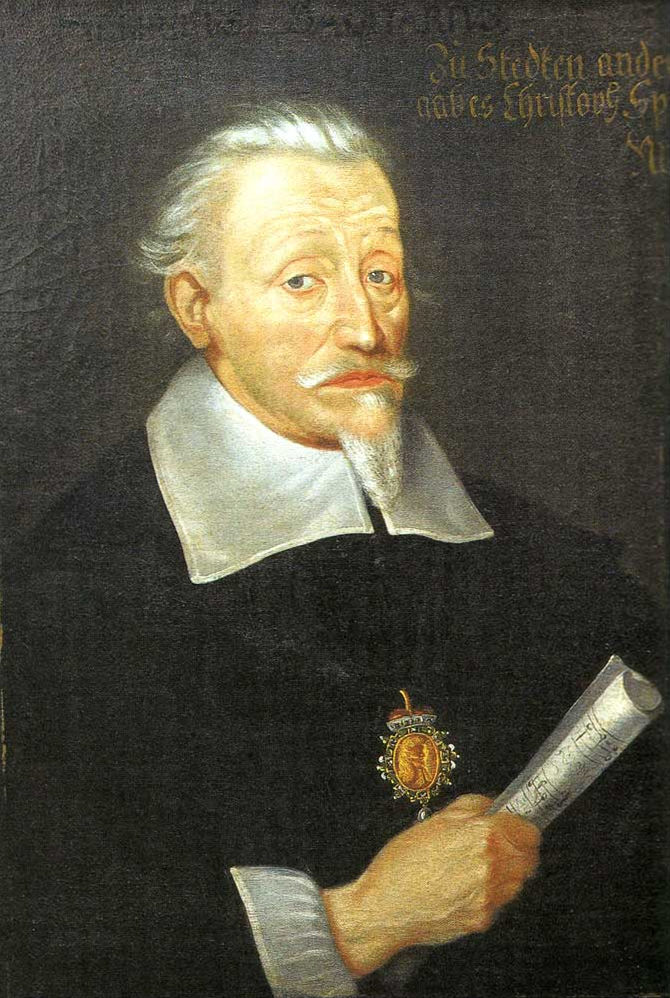
Baroque · Germany and Central Europe
1585 – 1672
Köstritz - Dresden
Review
He studied in Venice with Giovanni Gabrieli and returned years later to meet Monteverdi. He was a chapel teacher at the Dresden court for more than half a century, even in the worst years of the Thirty Years War.
He adapted the Italian style to the German language and to the Lutheran liturgy. His opera Dafne (1627), today lost, was the first in German. It's Bach's great predecessor.
Son of an innkeeper, the landgrave Mauricio of Hessen-Kassel discovered him as a child singer and took care of his education. He studied law in Marburg before his protector sent him to Venice. In Dresden he had to hold the chapel in the middle of the war, with unpaid musicians and reduced templates, and spent seasons in Copenhagen. He soon lost his wife and daughters.
His music serves the biblical word with an expressive intensity unpublished in Germany: the texts are said clearly and each image finds its musical gesture. He was able to adapt his writing to the available means, from the great polyoral works to the austere pieces for few voices of the years of war. In his old age he returned to a sober style, without instruments, in his Pasions. These are his main works:
I can INTEREST you.

Main works
- Italian Madrigales op. 1 (1611 - 26 years old)
- Psalmen Davids (1619 - 34 years old)
- Symphoniae sacrae (1629, 1647, 1650)
- Musikalische Exequien (1636 - 51 years old)
- The seven words of Christ on the cross (c. 1645)
- Geistliche Chormusik (1648 - 63 years old)
- History of Christmas (1664 - 79 years old)
- Passions according to Matthew, Luke and John (1665-1666 - 80-81 years old)

