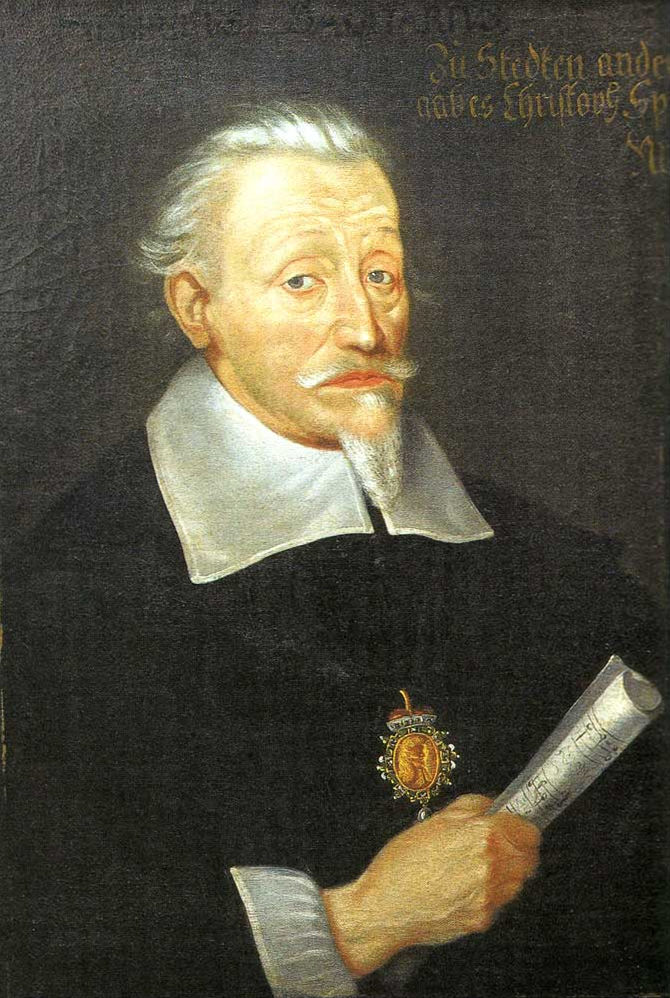
Heinrich Schütz · Baroque
1585 – 1672
1665 - 1666 · Liabilities to cappella · Dresden
Tonality
No tonality in a modern sense. There are three passions to cappella, written in the style of plain singing and each in a different ecclesiastical way.
Instruments
- Just voices, to cappella: evangelist, soloist characters and chorus.
From the atril
At eighty, Schütz wrote three Pasions, according to Luke, John and Mateo, for the Holy Week of the Dresden Court. These are works of extreme austerity: only voices, without instruments or continuous bass, as required by the Lutheran liturgy of those days.
I can INTEREST you.

What looks like a limitation becomes force. The soloists —the Evangelist, Jesus and the other characters— They sing without accompaniment, in a recital that Schütz composes note to note imitating the style of Gregorian song, but freely following the meaning and rhythm of German. The interventions of the crowd, the turbae, are brief chorus to four voices, alive and sometimes violent, like the cry of «Crucify him!». There are no arias or corals of reflection: only the naked story. The one of St Matthew, the most extensive, is the summit of this style, and the one that best shows the wisdom of the last Schütz.
What to hear
- The recitative of the Evangelist, without any accompaniment.
- The chorus of the crowd, short and sharp.
- The final chorus of the Passion according to St. Matthew.

