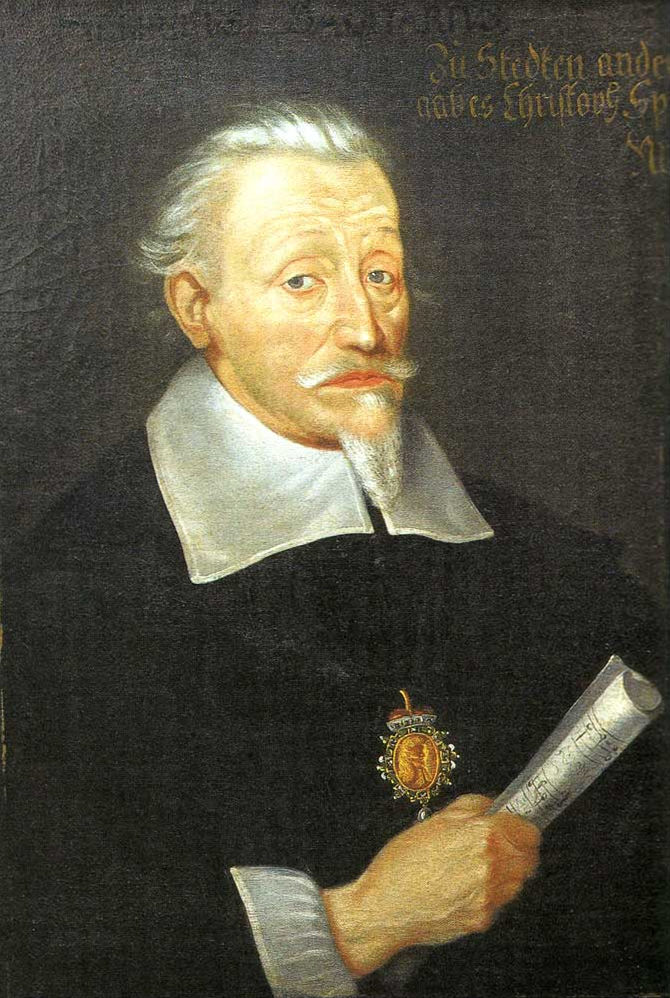
Heinrich Schütz · Baroque
1585 – 1672
c. 1645 · Short prayer · Dresden
Tonality
No tonality in a modern sense. It is modal music of the 17th century, prior to the system of greater and minor tonalities.
Instruments
- 5-part instrument set, without specified instruments (usually made with rope)
- Continuous low (organ)
From the atril
Die sieben Worte Jesu Christi am Kreuz It's a little masterpiece of just 20 minutes. Schütz brings together the seven phrases that Jesus pronounces on the cross according to the four Gospels and frames them in a story for soloists, chorus, instruments and continuum. It is not known exactly when he wrote it, but it is usually placed around 1645.
I can INTEREST you.

The work has a symmetrical structure: a choir and an instrumental symphony at first, the narrative in the center and the same symphony and a final choir to close. The story is distributed among several voices, sometimes one, sometimes a small group, which avoids monotony. And there is a detail that anticipates Bach: every time Christ speaks, his voice is accompanied by instruments, like a sound aureola that distinguishes it from the rest. The simplicity of the media makes emotion even more intense, especially in the last words.
What to hear
- The initial chorus «Da Jesus an dem Kreuze stund».
- The words of Christ, always accompanied by instruments.
- The instrumental symphony that framed the story.

