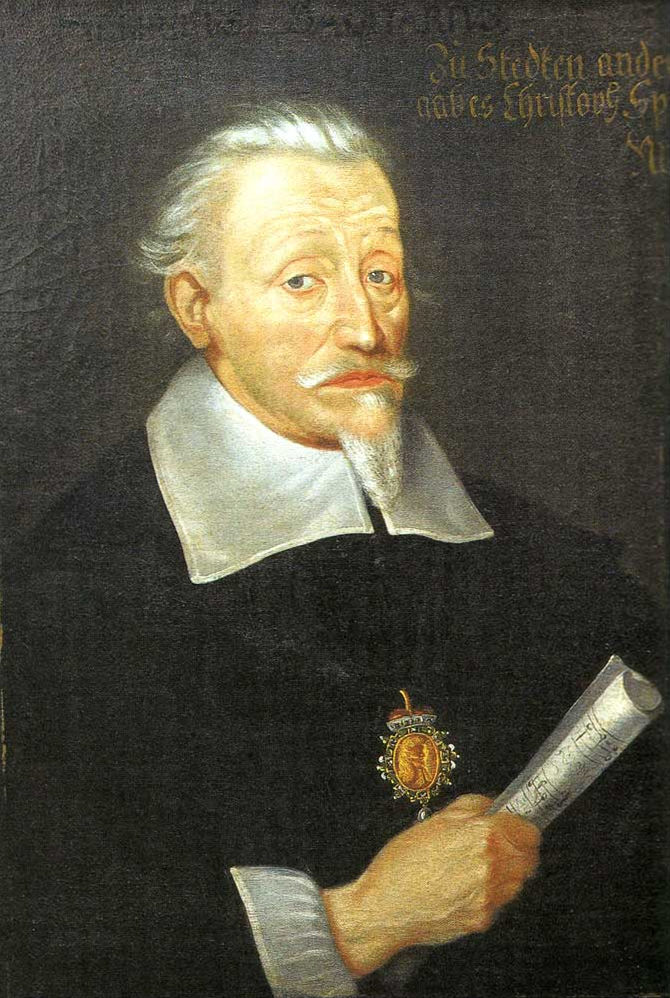
Heinrich Schütz · Baroque
1585 – 1672
1648 · Coral engines · Dresden
Tonality
Without a unique tone. It is a collection of still modal language motetes, and each has its own center.
Instruments
- Under continuous (organ), optional
- Instruments that can double the voices, at the choice of the interpreters
From the atril
The Geistliche Chormusik («spiritual coral music») was published in 1648, the year the Thirty-Year War ended. There are 29 German-language motetes for five to seven-voice chorus, which can be sung to cappella or with instruments by doubling the voices.
It's a statement of principle. In the prologue, Schütz warns young composers that, before being launched in modern style with continuous low, they must master the rigorous counterpoint, and these motetes are the model that proposes them. But there is nothing academic here: polyphonic writing is always at the service of the meaning of the text, with very alive musical images. «Die mit Tränen säen»from the tears of the seed to the joy of the harvest, or «Also hat Gott die Welt geliebt», of a luminous warmth, they are among the most beautiful of German coral music before Bach.
What to hear
- «Die mit Tränen säen».
- «Also hat Gott die Welt geliebt».
- «Selig sind die Toten», in the version of this collection.

