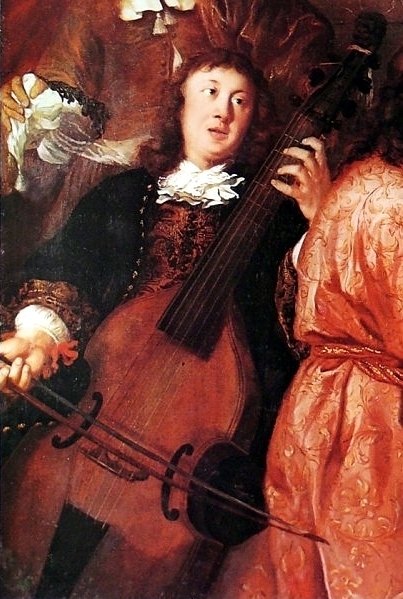
Baroque · Germany and Central Europe
c. 1637 - 1707
Helsingborg - Lübeck
Review
Of Danish origin, he was an organist of the church of Santa María de Lübeck since 1668, where he organized the famous evening concerts (Abendmusiken).
His fame was such that in 1705 the young Bach walked about four hundred kilometres to hear and learn from him. His organ works are the summit of the school in northern Germany.
To get Lübeck's position he had to marry his predecessor's daughter, Franz Tunder, a custom of the time. Years later he wanted to apply the same condition to his own successor: neither Handel nor Mattheson, who visited Lübeck in 1703, agreed to marry his daughter. Bach, who extended his visit several months without permission, did not stay either.
His organ works combine free and fantasy-filled sections with very rigorous leaks, in the so-called stylus phantasticus. His vocal music, especially the Membra Jesu nostri cycle, is of great intimacy, and his camera sonatas show his talent as an instrumentalist. These are his main works:
I can INTEREST you.


