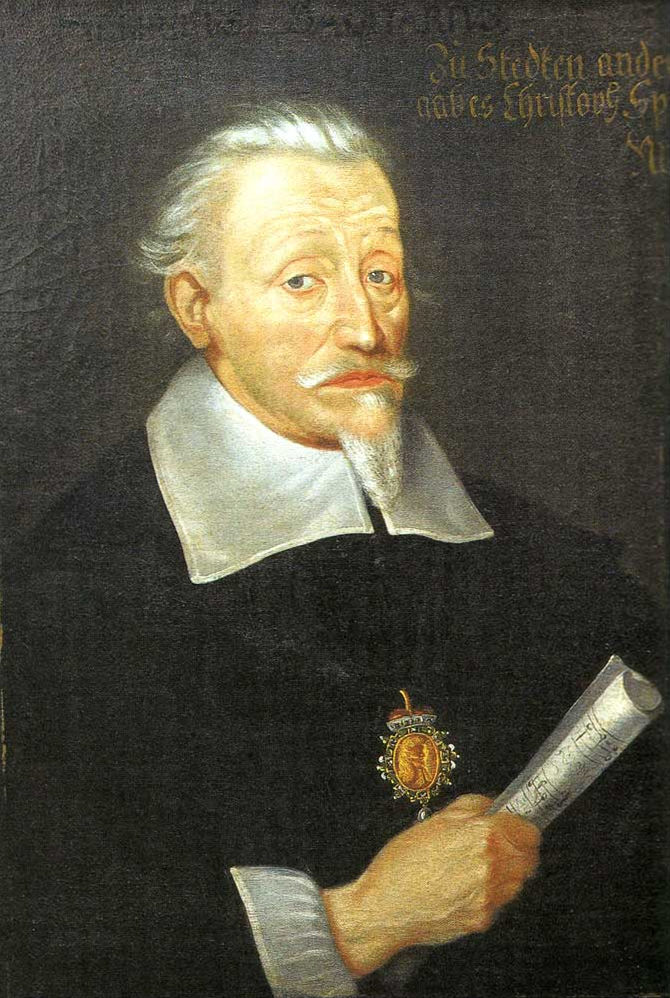
Heinrich Schütz · Baroque
1585 – 1672
1664 · Sacred history · Dresden
Tonality
Without a unique tone. It alters the story of the evangelist with instrumental and vocal scenes that each has its own center.
Instruments
- 2 violins and violets
- 2 sweet flutes
- 2 trumpets (clarini)
- 2 thrombons (sachet)
- Violone
- Continuous low (organ)
From the atril
The History der freuden- und gnadenreichen Geburt Gottes und Marien Sohnes, Jesu Christi, better known as Weihnachtshistory, was sung in the chapel of Dresden for Christmas around 1660, and Schütz published a part in 1664, when he was already about eighty years old. It tells the birth of Jesus according to the Gospels of Luke and Matthew.
The novelty is the recitative of the Evangelist, accompanied only by the continuum, which tells history with new flexibility in German music. Among his interventions are eight «Intermediate», scenes in which the characters speak, and each one has its instrumental color: violets for the angel, flutes for the shepherds, trumpets for King Herod, who sounds proud and threatening. Open and close the play a jolly chorus. It is a tender and light-filled music, written by an old man who kept the ability to amaze intact.
What to hear
- The angel's appearance to the shepherds.
- Herod's middle, with trumpets.
- The final chorus of Thanksgiving.

