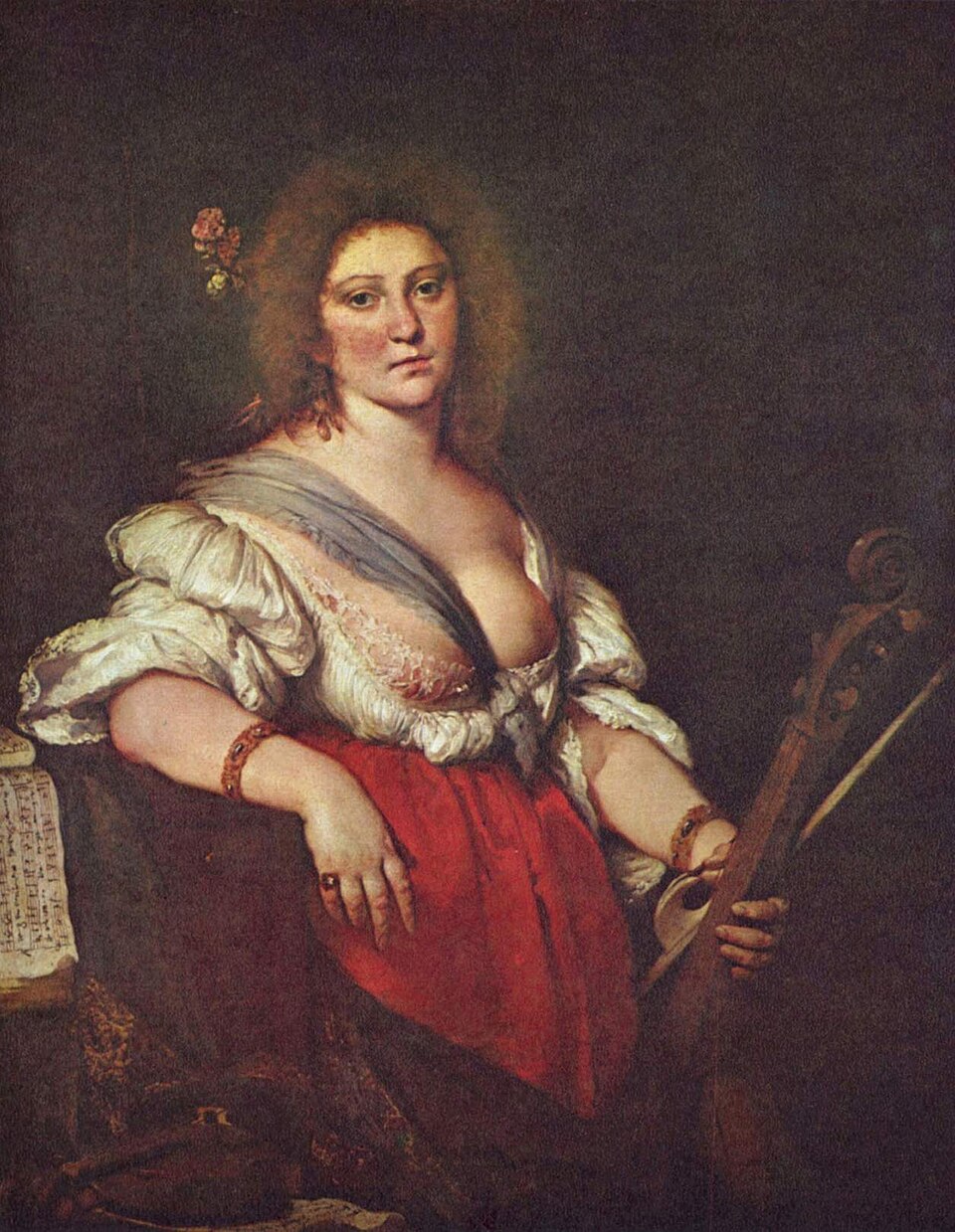
Baroque · Italy
1619 – 1677
Venice - Padua
Review
The adopted daughter of the poet Giulio Strozzi, who introduced her into the Venetian intellectual circles, studied with the operator Francesco Cavalli and was a very celebrated singer.
He published eight collections of profane vocal music, more than almost any composer of his time, something exceptional for a woman in the 17th century. Its cantatas and arias are of intense expressiveness.
His adoptive father, probably also his biological father, founded for her the Accademia degli Unisoni, where Barbara sang and proposed the topics for discussion. He never married, had four children and, without charge in the church or in the court, lived of his talent and the dedication of his books to mecenas such as Archduchess Ana de Médici or the Duke of Mantua.
He wrote almost always for soprano, his own voice, with long melodies, painful chromatisms and abrupt character changes that follow every word of the text. Many of its cantons speak of love not corresponding with a mixture of irony and very personal tear. Rediscovered in the 20th century, today is one of the most heard voices of the first Baroque. Here are your main collections:
I can INTEREST you.


