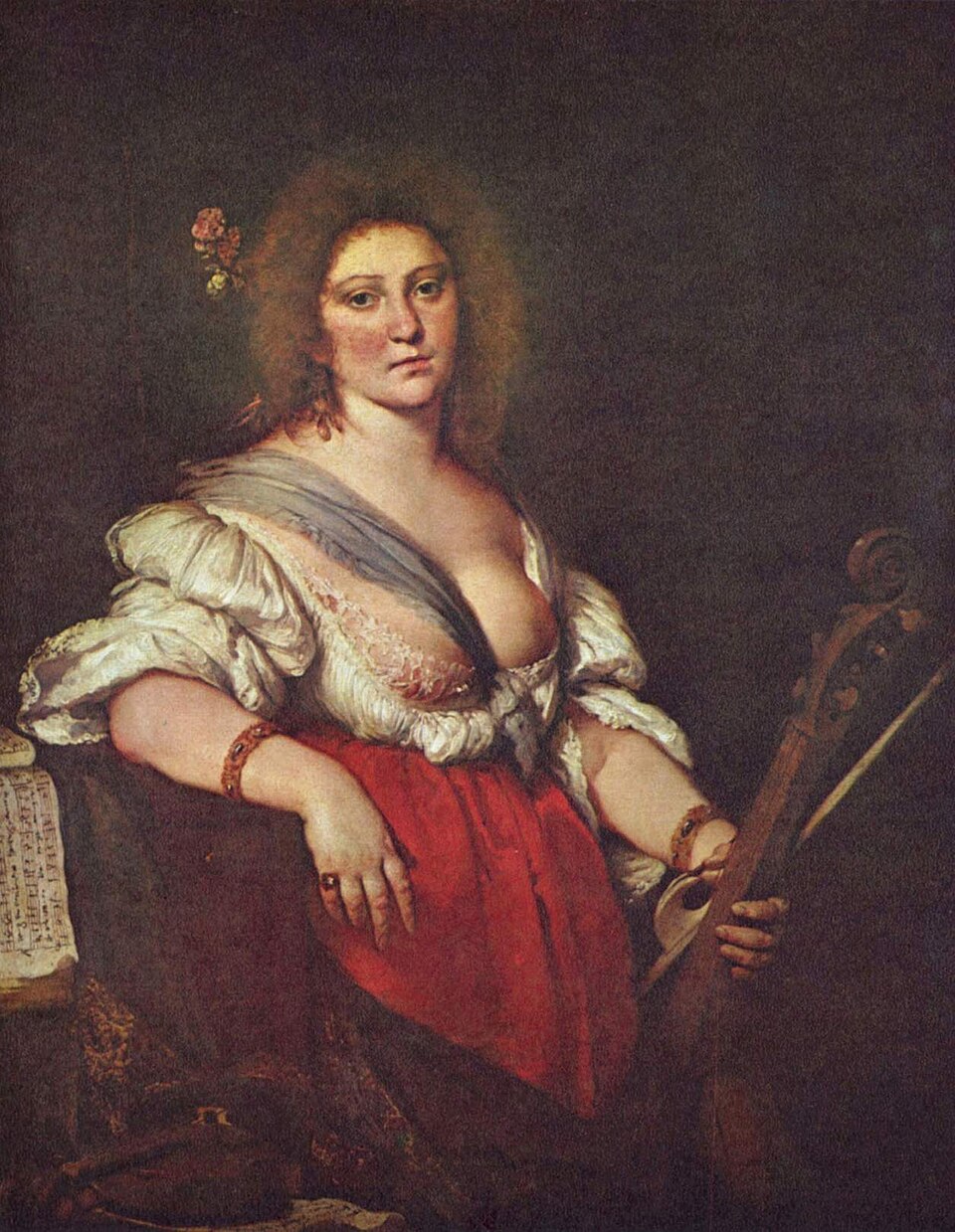
Barbara Strozzi · Baroque
1619 – 1677
1651 · Songs, aryets and duos with continuous · Venice
Tonality
Without a unique tone. It is a collection of cantons, aryan and duo, and each piece has its own.
Instruments
- Continuous low
From the atril
Seven years after the madrigals, Strozzi changes ground: now he writes especially for a single and continuous voice, the intimate format that dominated the Venetian halls. He gave the book to Emperor Fernando III and his wife Eleonora Gonzaga, a high bet that says a lot about his ambition. Here is the composer we know: free in form, attentive to every word and without fear of extending a lament if the text requests.
Playing these pieces one notes that the border between recitative and aria is very porous. A decylated passage suddenly becomes a cantabile melody on a repeated bass, and it breaks again when the emotion changes. For the interpreter it is a gift and a responsibility: you have to decide the tempo and the color with the text in front, because the score leaves a lot of space to the imagination.
What to hear
- The sudden changes between the decclamation and the singing, always at the service of the sense of the poem.
- The duos, where two voices are pursued and founded on disonances that are resolved with a lot of sensuality.
- The short and light aryets, which show their most playful and ironic side.

