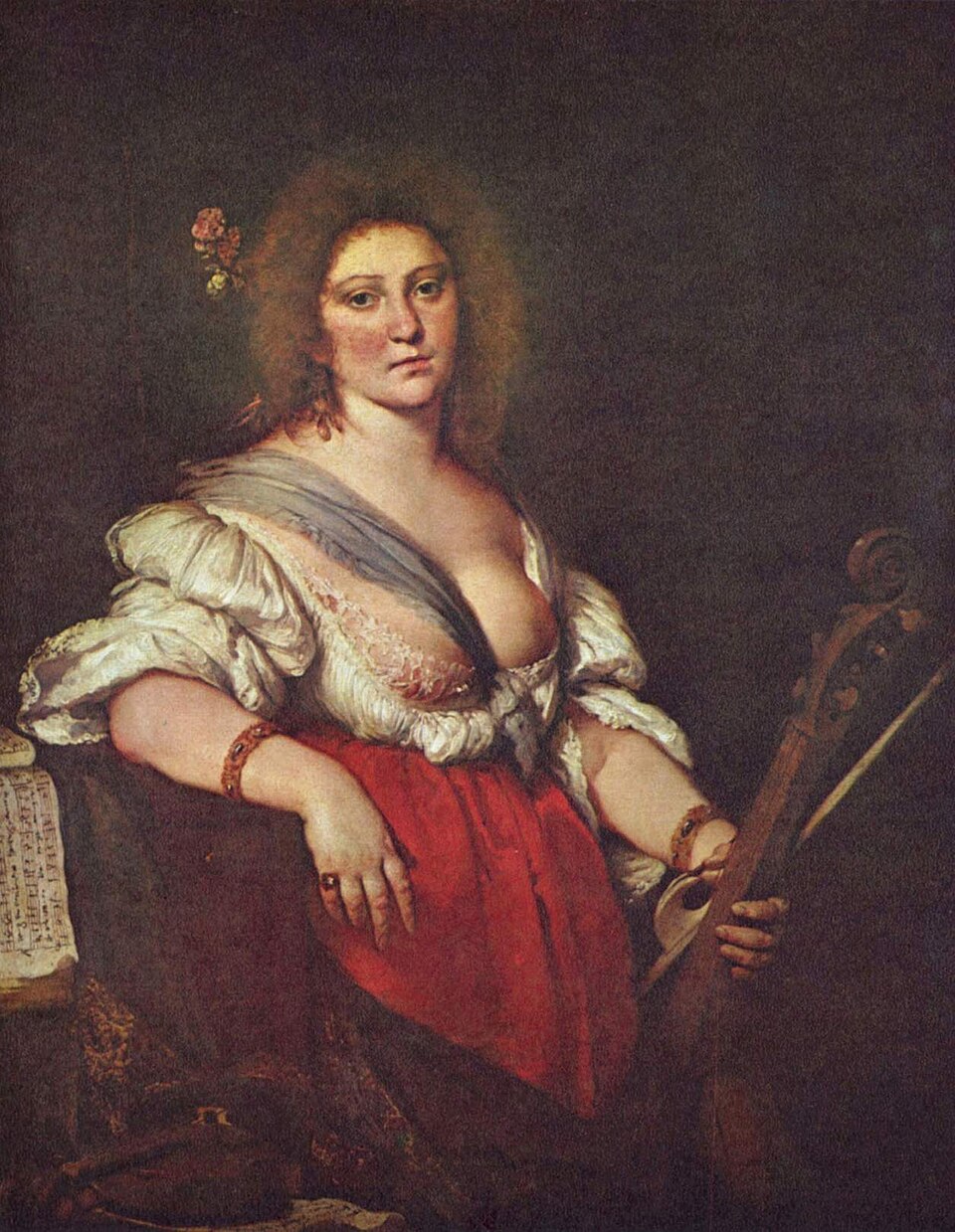
Barbara Strozzi · Baroque
1619 – 1677
1664 · Aries for voice and continuous · Venice
Tonality
Without a unique tone. It's a collection of arias and each has his own.
Instruments
- Continuous low
From the atril
It's the last collection Strozzi published, and you can see the hand of someone who has nothing to prove. The star piece is Che si può fare, «What can be done?», a complaint against the stars and the destiny built on a bass that descends over and over again, as one who is resigned and not resigned.
I can INTEREST you.

This obstinate bass is the great pleasure of the continuist: you repeat it dozens of times, but never the same, varying the chord, weight and color as the voice floats above with an almost improvised freedom. The melody stretches and shrinks the phrases against the bass, and from that tension is born all drama. It is one of the most recorded Baroque pieces of recent decades, and with reason: it sounds modern and still 1664.
What to hear
- The descending low of Che si può fare, which acts like a relentless watch under the voice.
- How the singer advances or delays her sentences regarding the bass to create tension.
- The contrasts between the slow complaint and the most living and almost ironic passages.
Listen
Barbara Strozzi - Arie, op.8 (selection) · SP's score videos
When you press the YouTube player will be loaded.

