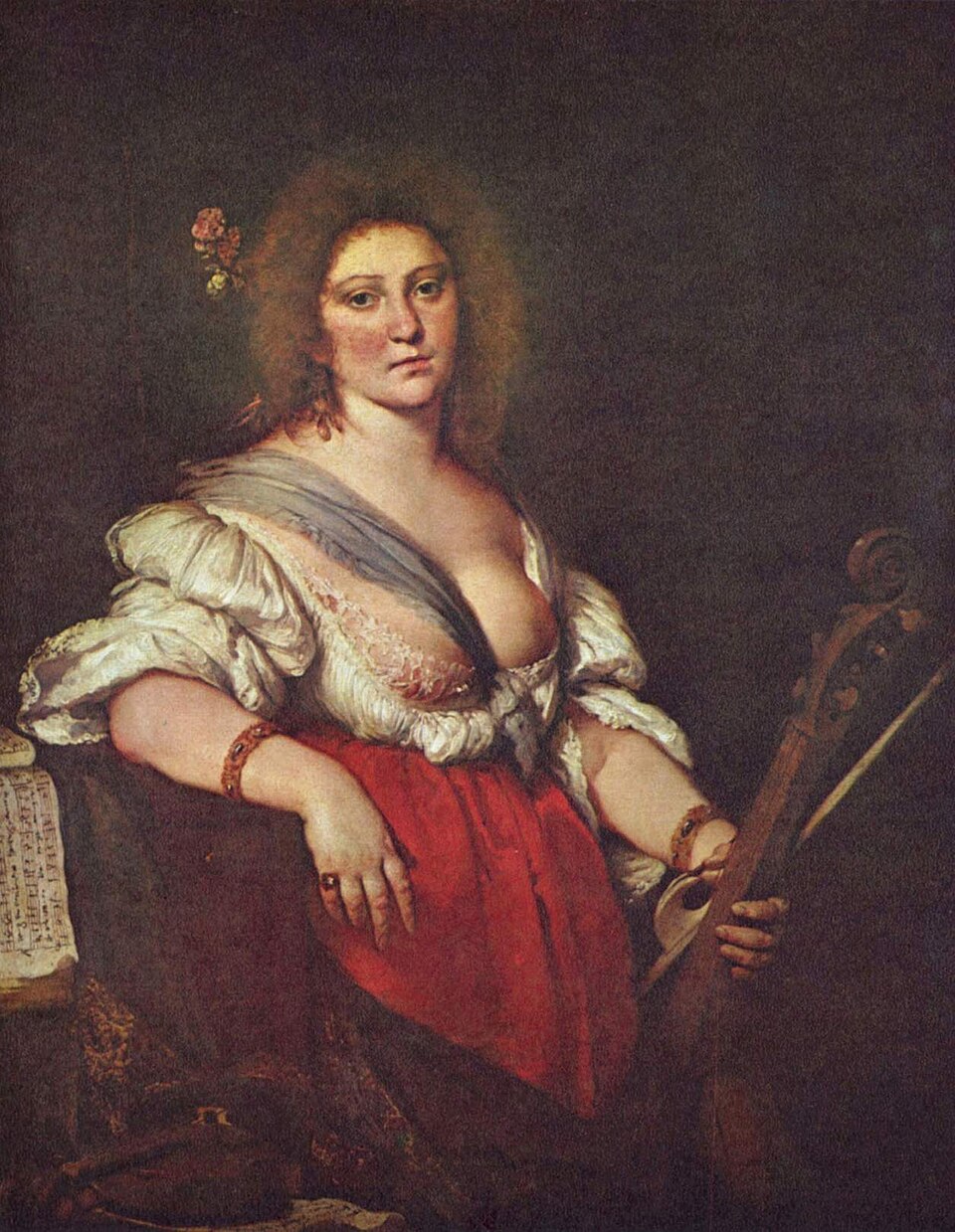
Barbara Strozzi · Baroque
1619 – 1677
1659 · Songs for single and continuous voice · Venice
Tonality
Without a unique tone. It's a collection of cantons and each has his own.
Instruments
- Continuous low
From the atril
«The pastimes of Euterpe», the muse of music: a modest title for one of the most intense collections of the 17th century. It is the mature Strozzi, the absolute owner of the cantata for voice alone, and its jewel is Lagrime mie, a lament of love that any baroque soprano wants to have in his repertoire.
Lagrime mie begins with a very long dissonance over the word «tears», held against the bass until it hurts, and then progress between torn recites and breaking chorus starts. As a continuist, the most difficult thing is to know how to shut up: to let the silences weigh and not fill in every hole. It is music that demands expressive courage to those who sing it and patience to those who accompany it.
What to hear
- The initial dissonance of Lagrime mieone of the most bold entries of the music of his time.
- The chorus that comes back again and again, increasingly in despair.
- The descending chromatism, the classic language of crying in the Baroque.

