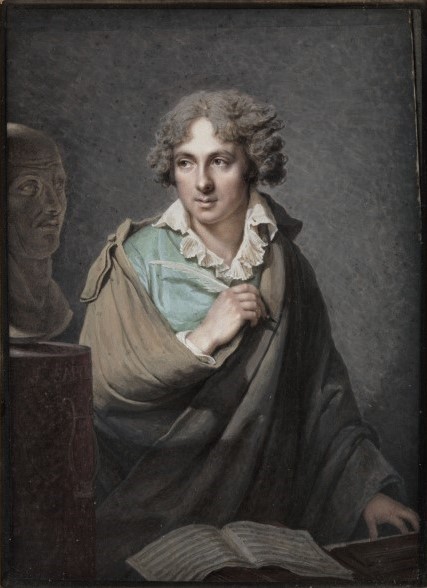
Classification · Italy
1760 – 1842
Florence - Paris
Review
Florentine installed in Paris since 1786, lived the Revolution, the Empire and the Restoration. His operas Médée and Les deux journées were models for the musical theatre of the 19th century, and Beethoven considered him the greatest living composer.
He led the Paris Conservatory between 1822 and 1842 with a firm hand. His sacred music is impressive: the Réquiem en do menor (1816) remembered Louis XVI, and the Réquiem en remenor wrote it for his own funeral.
Son of a clavecinist of the Pergola theatre of Florence, he composed masses since childhood and studied with Giuseppe Sarti in Bologna and Milan. After a brief stay in London he settled in Paris, where he directed the Théâtre de Monsieur. Napoleon did not appreciate his music and Cherubini spent years of discouragement, in which he even devoted himself to botany and painting. With the Restoration he was appointed superintendent of the king's music.
His music is serious and solid, with a master counterpoint and a powerful orchestra that impressed Beethoven, Schumann and Brahms. At the head of the Conservatory he was a feared director, famous for his severity with students like Berlioz. His contract-and-escape treaty was used for decades. These are his main works:
I can INTEREST you.


