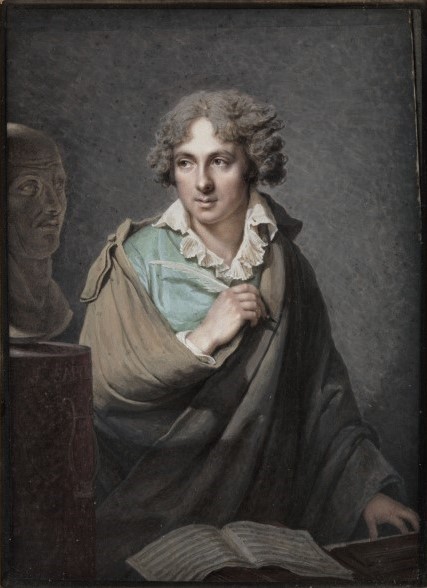
Luigi Cherubini · Classification
1760 – 1842
1797 · Opera · Paris, Théâtre Feydeau
Tonality
Without a unique tone. Like every opera, it goes through many tonalities throughout its scenes, arias and ensembles. The overture is in fa minor.
From the atril
Médée It's Cherubini's masterpiece. It was released in Paris in 1797 as a comic opera, that is, with spoken dialogues, despite being a somber tragedy. He fell into oblivion for a long time and was mainly known in an Italian version with recitations added by Franz Lachner in 1855. Her great resurrection came in 1953, when Maria Callas made her one of her legendary roles.
The story is that of the Greek myth: Medea, abandoned by Jason, who is going to marry the daughter of the king of Corinth, is killing the bride and her own children. Cherubini writes a soprano role of tremendous difficulty and intensity, which demands a powerful voice and great dramatic capacity. The orchestra is violent and tense, already preromantic, with the overture in fa minor and the orchestral storm that precedes the third act as overwhelming moments. Brahms considered this opera one of the summits of dramatic music. It is a work that anticipates the romanticism of Weber and Wagner.
What to hear
- The overture in fa minor.
- The big scenes of Medea.
- The orchestral storm before the third act.

