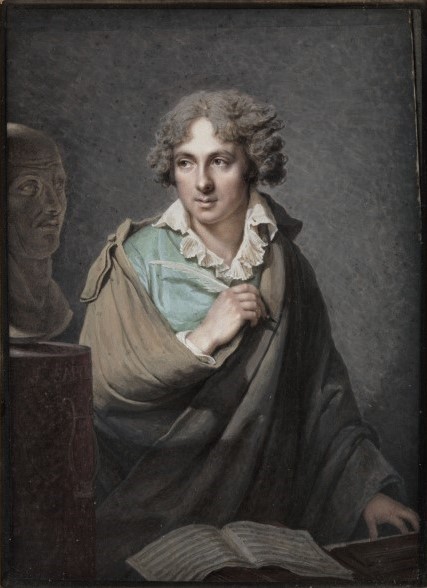
Luigi Cherubini · Classification
1760 – 1842
1791 · Comic opera · Paris, Théâtre Feydeau
Tonality
Without a unique tone. Like every opera, it goes through many tonalities throughout its scenes, arias and ensembles.
From the atril
Lodoïska, released in Paris in 1791, in the heart of the Revolution, was Cherubini's first great success in France: it had about two hundred performances in a row. It is an early example of «rescue opera», a genre very from the revolutionary era in which a hero frees a prisoner from a tyrant.
The action takes place in Poland: Princess Lodoïska is locked in the castle of a cruel baron, and her beloved Floreski, with the help of a group of Tatars, is able to rescue her in a spectacular ending, with the castle in flames and falling apart on the scene. Cherubini writes a music of great dramatic energy, with a much more elaborate and powerful orchestra than usual in French comic opera, with talks between the numbers. His orchestral writing influenced Beethoven, which deeply admired Cherubini, and the model of the rescue opera would lead to Fidelium.
What to hear
- The energy of the overture.
- The orchestration, rich and powerful.
- The end of the castle fire.

