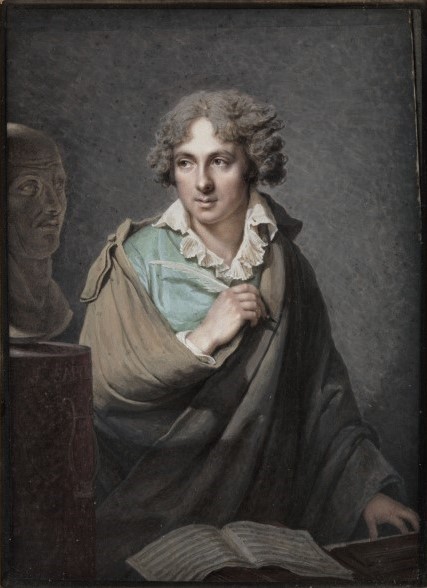
Luigi Cherubini · Classification
1760 – 1842
1836 · Male Choir and Orchestra · Paris
Tonality
From the atril
At seventy-six years old, Cherubini wrote a second réquiem, in a minor re, for his own funeral. His first réquiem had caused problems because the church authorities in Paris did not admit female voices in the liturgy, so this time he wrote it only for male chorus to three voices and orchestra. It was played in his ecstasy in 1842.
Limitation to male voices gives the work a serious, dark and austere color, very suitable to the theme. As in the first period, there are no soloists: the choir is the absolute protagonist. The «Dies irae» is of an impressive dramatic force, with the orchestra unleashed and the chorus in powerful blocks, while other movements, such as the «Pie Jesu»They have a serenity. It is the work of a composer who looks at death with dignity and trade. For male chorus, it is one of the great works of the repertoire, and a very valuable rarity.
What to hear
- The severe color of the male choir.
- The dramatism of «Dies irae».
- The serenity of «Pie Jesu».

