Today 24 / 11 was born
- Hector Berlioz · 1803, 223 years ago
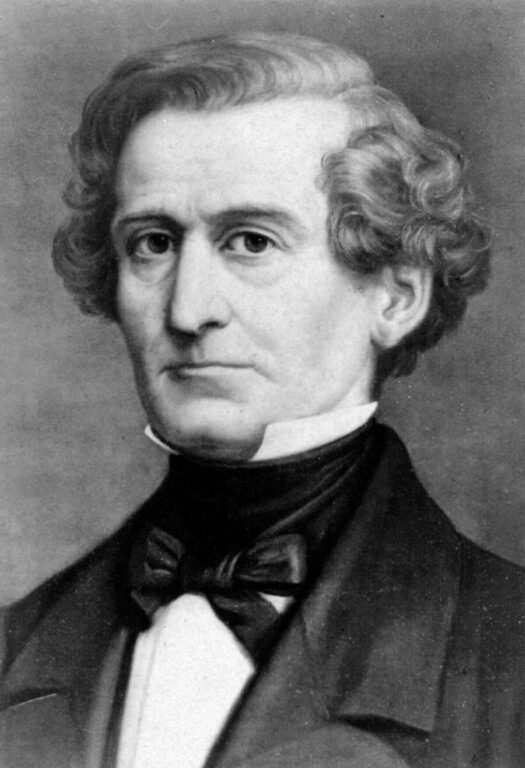
Romanticism · France
1803 – 1869
La Côte-Saint-André - Paris
Review
Sent to Paris to study medicine, he left her for music against the will of his family. He won the Rome Prize in 1830, the same year he premiered his fantastic symphony, born of his passion for actress Harriet Smithson.
He imagined a new orchestra, with unprecedented colors and sound masses, and wrote an orchestration treaty that is still being studied. He served as a musical critic and was more appreciated in Germany and Russia than in his own country.
Son of a rural doctor, he learned music almost alone, with the flute and the guitar; he never played the piano well. He married Harriet Smithson in 1833, but the marriage failed. To survive he wrote for decades a musical critic, and was a librarian of the Conservatory. His Memories, full of humor and passion, are one of the great books on music. His last years were bitter, marked by the death of his son.
He was the great innovator of the romantic orchestra: every work of his invents his own form and a combination of new timbres. He was attracted to the literary themes, from Shakespeare to Goethe and Virgilio, and the gigantic troops, although he also wrote pages of great delicacy. These are his main works:
I can INTEREST you.

Listen to it live
Next concerts with works by Hector Berlioz in Spain
- Thu11FebBOS: The Fantastic Symphony (Ibert and Berlioz)Bilbao Orkestra Sinfonikoa, Pablo González (director), Patricia Ruiz (flute)19: 30. · Euskalduna Palace · Bilbao
- Fri12FebBOS: The Fantastic Symphony (Ibert and Berlioz)Bilbao Orkestra Sinfonikoa, Pablo González (director), Patricia Ruiz (flute)19: 30. · Euskalduna Palace · Bilbao
Main works
- Fantastic symphony op. 14 (1830 - 27 years old)
- Harold in Italy (1834 - 31 years old)
- Grande message des morts (Réquiem) (1837 - 34 years old)
- Romeo and Juliet (1839 - 36 years old)
- Cycle Les nuits d'été (1841 - 38 years old)
- Treaty of instrumentation (1844 - 41 years)
- The conviction of Fausto (1846 - 43 years old)
- Opera Les Troyens (1858 - 55 years old)

