Today 24 / 11 was born
- Charles Gounod · 1818, 208 years ago
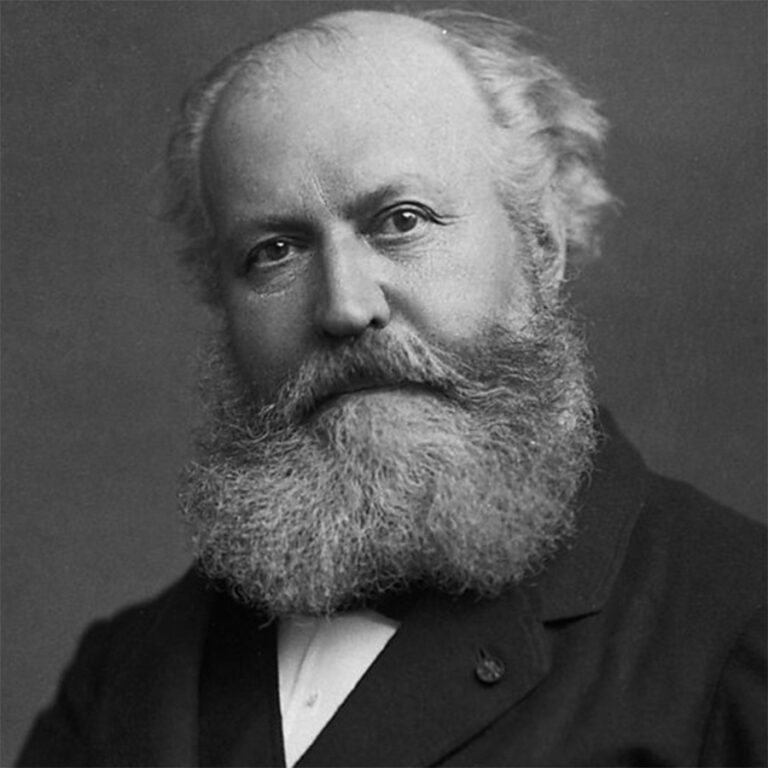
Romanticism · France
1818 – 1893
Paris - Saint-Cloud
Review
He won the Rome Prize in 1839, for a time he thought of becoming a priest and never stopped writing religious music.
His opera Faust (1859) became one of the most represented in the world. His Hail Mary, a melody superimposed on the first prelude of Bach's well-tempered Key, is one of the most popular pieces of all time.
The son of a painter and a pianist, he was a student of Halévy and Lesueur at the Conservatory of Paris. In Rome he discovered the polyphony of Palestrina, which marked him forever. During the French-Prussian war he settled in London, where he was the first choir director of the Royal Albert Hall, the current Royal Choral Society. Great fan of Mozart, he wrote a book about Don Giovanni.
His music stands out for the elegance of the melodic line, the clarity of the orchestra and a very French sensitivity to the word sung. He wrote twelve operas, numerous masses and oratoriums and hundreds of songs. His style had a decisive influence on Bizet, Massenet and Fauré. These are his main works:
I can INTEREST you.

Main works
- Solemn Mass of St. Cecilia (1855 - 37 years old)
- Faust Opera (1859 - 41 years old)
- Ave Maria, on a prelude of Bach (1859 - 41 years old)
- Opera Mireille (1864 - 46 years old)
- Opera Roméo et Juliette (1867 - 49 years old)
- A puppet's funeral march (1872 - 54 years old)
- Petite symphonie for winds (1885 - 67 years old)

