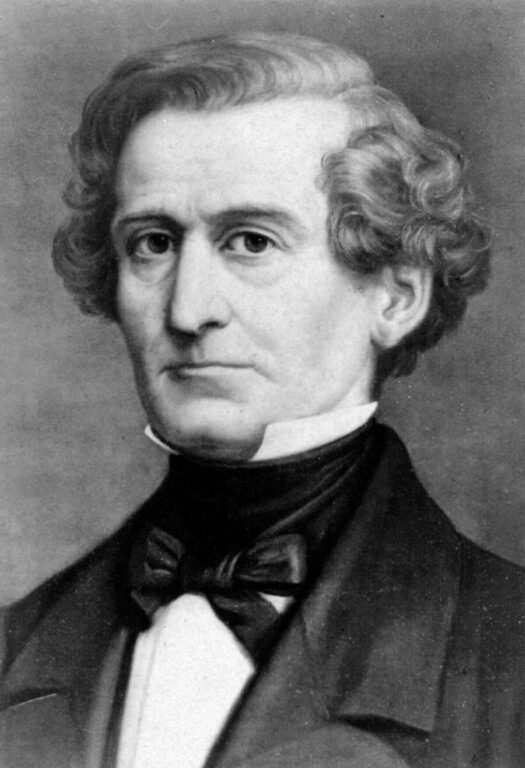
Hector Berlioz · Romanticism
1803 – 1869
1846 · Dramatic legend · Paris, Opéra-Comique
Tonality
Without a unique tone. It is a dramatic legend and it runs through many tonalities throughout its scenes.
From the atril
La damnation de Faust It premiered at the Opéra-Comique de Paris in December 1846, in concert version, in front of a half-empty room. Berlioz had paid for the production himself and was ruined. Today is one of his most interpreted works. He called her. «dramatic legend»: is not an opera or an oratory, but a succession of scenes based on the Faust of Goethe, in the translation of Gérard of Nerval.
I can INTEREST you.

Berlioz takes freedoms: it places the beginning in Hungary only in order to include its settlement of the «Rákóczi March»which had caused anger in Budapest. From there, the work is a parade of brilliant scenes: the song of the rat and that of the flea in the tavern of Auerbach, the «Ballet of the silphs»with its almost immaterial orchestra, the minuet of the fatus fires, the mockery serenade of Mefistopheles. Margarita has one of the most beautiful pages of Berlioz, «D'amour l'ardente flamme»with an English corno who talks with the voice. And the end is tremendous: the race to the abyss, with the horses galloping in the orchestra, and the fall of Fausto in hell.
What to hear
- The «Hungarian March» (Rákoczi).
- The «Ballet of the silphs».
- «D'amour l'ardente flamme» and the race to the abyss.
Listen
💥 HECTOR BERLIOZ ❯ The Conviction of Fausto ❯ London Symphony Orchestra - Sir Colin Davis 🎶 · Neville Goddard
When you press the YouTube player will be loaded.

