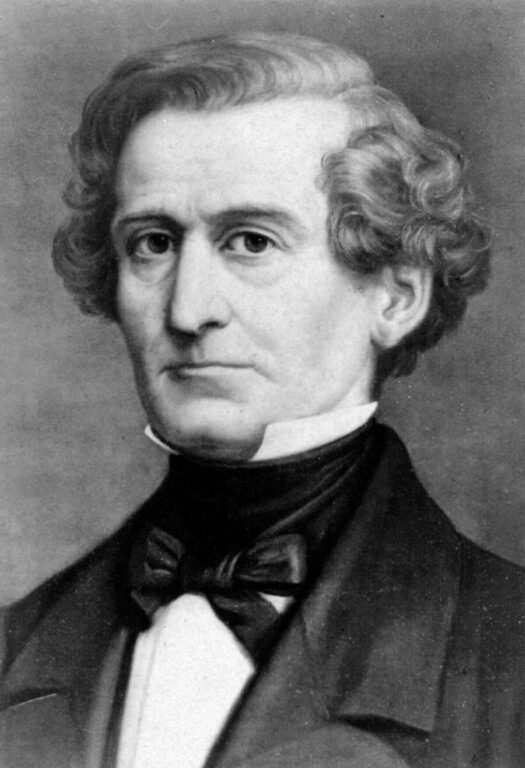
Hector Berlioz · Romanticism
1803 – 1869
1844 · Treaty · Paris
Tonality
Not applicable. It's a theoretical treaty on orchestration, not a musical work.
From the atril
The Grand traité d'instrumentation et d'orchestration modernespublished in 1844, it's not a play to listen to, but it has influenced the music we hear as much as any symphony. Berlioz, who did not play the piano and thought directly in orchestral colors, gathered in it all he knew about each instrument: its extension, its records, what sounds good and what does not, and how to combine it with others.
I can INTEREST you.

What makes it unique is that it's not a cold manual. Berlioz writes as a poet and as a passionate critic: he describes the character of each instrument, analyses examples of Gluck, Beethoven or Weber, complains about the mediocre orchestras and ends up imagining an ideal orchestra of hundreds of musicians. He included then new instruments, such as the saxophone of his friend Adolphe Sax. Generations of composers, from Rimski-Korsakov to Mahler, learned to orchestrate with him. Richard Strauss published in 1905 a revised and expanded version that is still being consulted.
What to read (and listen)
- The chapters on viola and English corno, their favorite instruments.
- The final description of your ideal orchestra.
- The Fantastic symphonyas a practical example of everything he explains.

