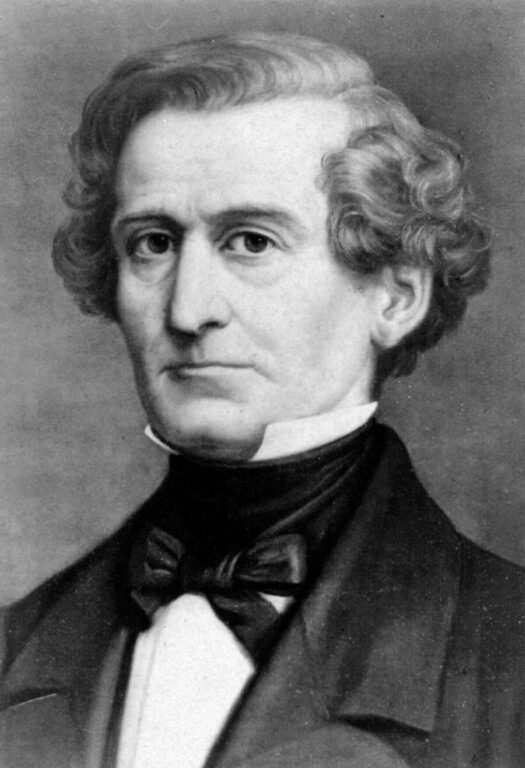
Hector Berlioz · Romanticism
1803 – 1869
1839 · dramatic symphony · Paris
Tonality
Without a unique tone. It is a dramatic symphony with chorus and its different parts go through several tonalities.
From the atril
With the twenty thousand francs that Paganini gave him, Berlioz was allowed to write whatever he wanted, and he chose Shakespeare, his great passion. Roméo et Juliette, released in Paris in 1839 and dedicated to Paganini, is not an opera or a symphony for use, but a «dramatic symphony» for soloists, choirs and great orchestra.
The great thing is that Berlioz entrusts the main scenes to the orchestra alone. The lovers do not sing: their love expresses the «Love scene», a long orchestral adagio that many consider the best that he wrote, and that Wagner admired deeply. The scherzo de la «Queen Mab», the fairy of dreams, is a filigree of an amazing lightness, with violins in satico, ancient and harmonic dishes. The voices intervene in the prologue, in the funeral courtship of Juliet and in the great end, when Fra Lorenzo reconciles the two families. It's an irregular work but full of unique moments.
What to hear
- «Romeo alone» And the party at the Capulets'.
- The «Love scene», only for orchestra.
- The scherzo de la «Queen Mab».

