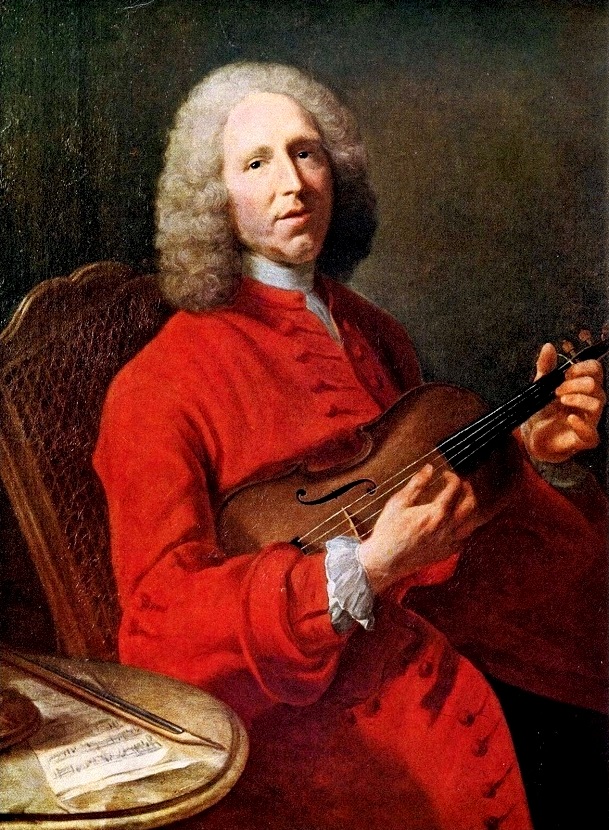
Jean- Philippe Rameau · Baroque
1683 – 1764
1722 · Treaty · Paris
Tonality
It has no tonality: it is not a work to interpret, but the theoretical treaty that laid the foundations of modern tonal harmony.
Instruments
- None: it is a theoretical treaty, not a work to interpret.
From the atril
Before being the great operator of France, Rameau was known as a theorist. Su Traité de l'harmonie réduite à ses principes naturelspublished in Paris in 1722, when he was still an organist of almost unknown provinces, he changed the way Western music was understood forever.
Rameau sought the physical and mathematical foundations of harmony. His great contribution was the idea of «basic»: chords are not simple overpositions of voices, but entities with a root note, which remain the same chords even if they are invested. Hence the modern notion of tonic chord, of dominant and subdominant, and of how they chain together. Every student of harmony, even if he does not know, learns today with categories that Rameau formulated. For a musician, reading the pages he explains is attending the birth of a way of thinking.
What to read (and listen)
- The chapters on fundamental bass.
- The explanation of the chord investments.
- Its key pieces, where theory becomes music.
Listen
Table ronde sur le traité d'harmonie de Rameau (Ircam, 7 novembre 2022) · François NICOLAS
When you press the YouTube player will be loaded.

