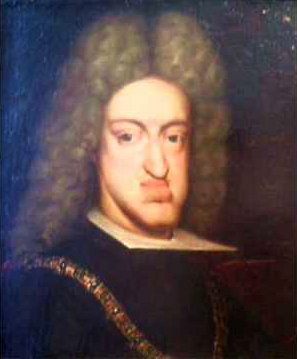
Sebastian Durón · Baroque
1660 – 1716
About 1680 - 1706 · Religious music · Madrid
Tonality
Without a unique tone. It is a wide repertoire of carols and each has his own.
Instruments
- Soloist voices and several choirs.
- Violins and other instruments in some pieces.
- Continuous bass (organ, harp).
From the atril
In the Spanish Baroque, the villain was not just a Christmas song: it was a religious work in Spanish, for voices and instruments, which was sung at the great feasts of the year (Christmas, Reyes, Corpus Christi, the feasts of the Virgin and the saints). As an organist of several cathedrals and then a master of the Royal Chapel of Madrid, Durón composed a large number of them.
Its carols combine the chorus, sung by the choir, with the soloist voice coils, and often include almost theatrical scenes, with popular characters such as pastors, gypsies or blacks, that bring humor and color. Durón introduced in them elements of the Italian style, such as rectifiers, arias and violins, which made his music more brilliant and dramatic. This was worth years after Father Feijoo's criticism, who accused him of having brought the style of the theatre to the church. Today, however, these carols are heard as one of the most live and original expressions of the Spanish Baroque.
What to hear
- The alternation of stribble and coil.
- The scenes with popular characters.
- The Italian-style violins and recites.

