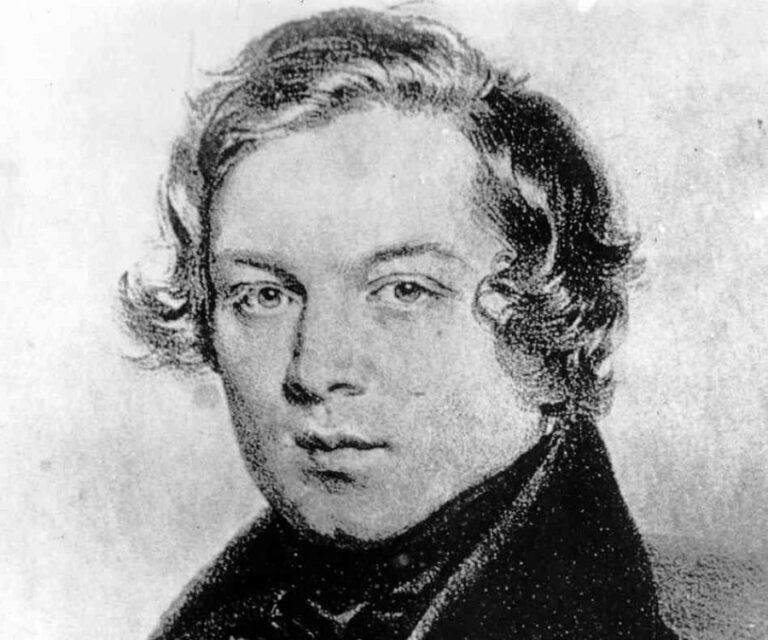
Robert Schumann · Romanticism
1810 – 1856
1842 · Camera music · Leipzig
Tonality
From the atril
If 1840 was the year of the song and 1841 was the year of the symphony, 1842 was for Schumann the year of camera music. The Quintet in my major bemol op. 44, dedicated to Clara, was one of its happiest creations, and practically invented a genus: the quintet for piano and string quartet, which would then grow Brahms, Dvorak, Franck and Shostakovich.
Schumann takes advantage of the piano's power, which can compete with the strings as an equal, to create a rich, almost symphonic sound. The first movement starts with an exultant and bright theme, which contrasts with a second tender theme, dialected between cello and cello. The second movement is a kind of dark and mysterious funeral march, interrupted by agitated episodes. The scherzo is based on energy-filled ascending scales. And the end is a feat: it culminates in a double leak that combines the theme of the end with that of the first movement, closing the circle. It is one of the most loved camera works by interpreters and the public.
What to hear
- The lulling theme of the beginning.
- The funeral march of the second movement.
- The double leak in the end.
Listen
Hélène Grimaud: Schumann - Piano Quintet, Op. 44 (with soloists from the Orchestra of Paris) · WOMO MUSIC
When you press the YouTube player will be loaded.

