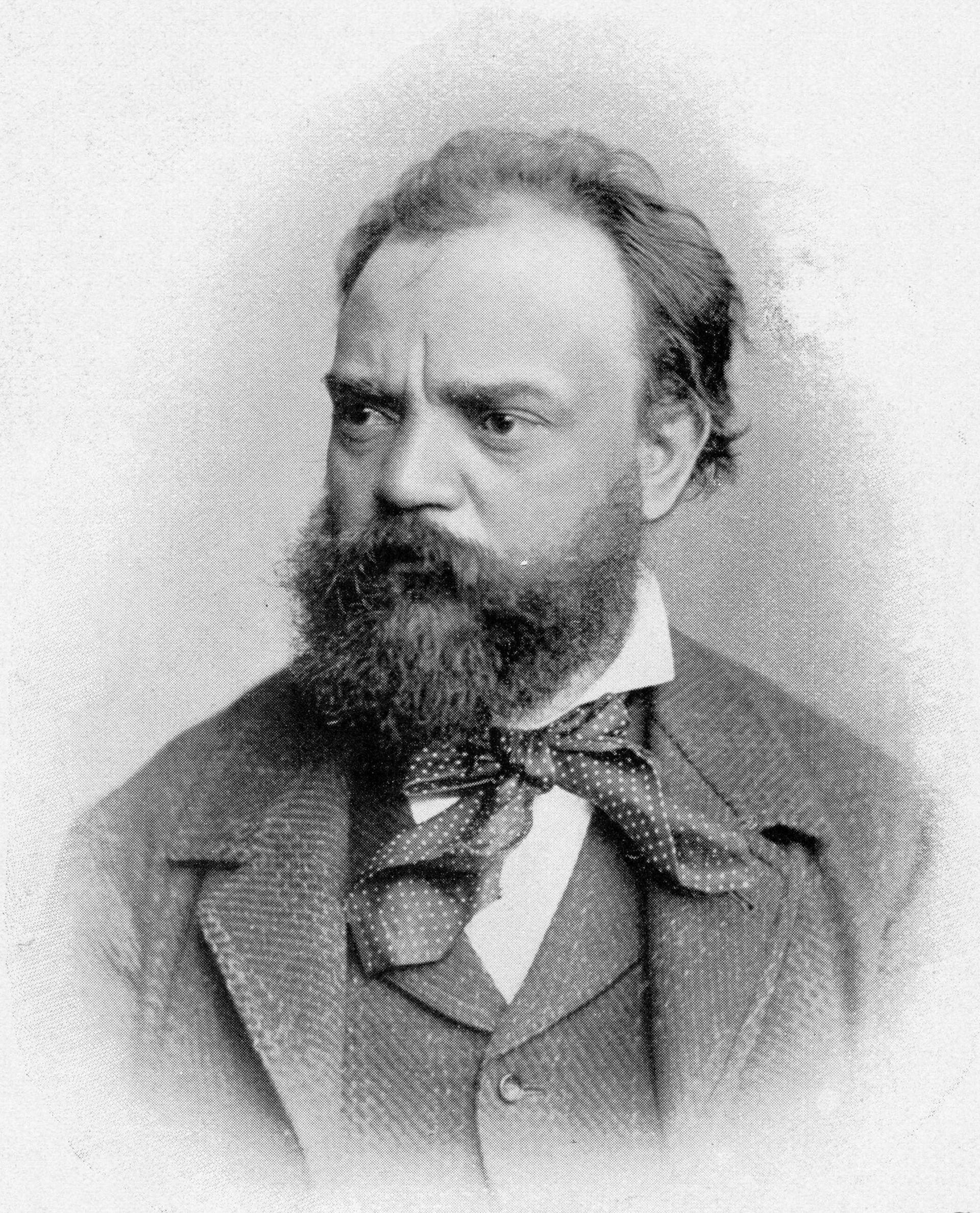
Antonín Dvorak · Romanticism
1841 – 1904
1878 / 1886 · Four-hand piano and orchestra · Prague
Tonality
Without a unique tone. It's 16 dances in two series and each has his own.
From the atril
Editor Fritz Simrock, following Brahms' recommendation, asked Dvorak for something similar to Hungarian dances They sold so much. The result was eight. Slavic dances for a four-hand piano, which Dvorak himself orchestrated right away. They were a successful success throughout Europe and they took it out of anonymity. Eight years later a second series arrived, op. 72, more melancholic and refined.
I can INTEREST you.

Unlike Brahms, Dvorak does not use real popular melodies: he invents his own, with the rhythms of Czech, Slovak, Polish or Serbian dances, such as the furious, dumka, polca or sousedská. In the orchestra they are a whirlwind of energy, with changes of accent that force to be very awake, and moments of sudden tenderness. The 2nd of op. 72, in my youngest, is for me one of the most beautiful melodies of the 19th century.
What to hear
- No. 1 of op. 46, an furious with its displaced accents.
- # 2 of op. 72, a dance «the old» full of melancholy.
- The difference between the four-hand piano version and the orchestral version.
Listen
A. Dvorak, Slavic Dances No. 1, No. 7 Op. 46, No. 8 and No. 7 Op. 72 with Vladimir Sagaydo · Xalapa Symphony Orchestra
When you press the YouTube player will be loaded.

