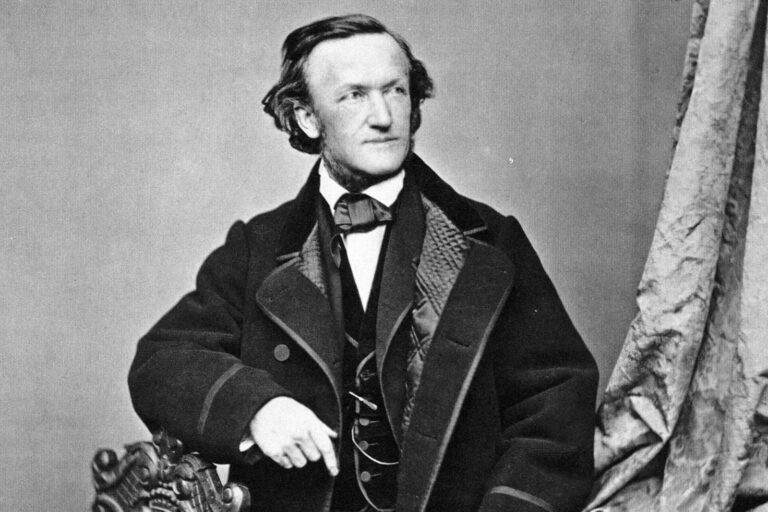
Richard Wagner · Romanticism
1813 – 1883
1845 · Opera · Dresden
Tonality
Without a unique tone. Like every opera, it goes through a lot of tonalities. The overture, with the chorus of the pilgrims, is in My major.
From the atril
Tannhäuser, premiered in Dresden in 1845, it mixes two German medieval legends: that of the trovator who lived in the underground kingdom of Venus, the goddess of love, and that of the singing contest of the castle of Wartburg. The central conflict is between sensual love, represented by Venus, and spiritual love, embodied by pure Elisabeth.
I can INTEREST you.

Tannhäuser leaves the Venusberg and returns to the world, but in the singing contest, instead of celebrating the ideal love, he sings the pleasures of Venus and scandalizes everyone. To obtain forgiveness, he pilgrims to Rome, but the Pope rejects it; only Elisabeth's sacrifice redeems it. The oberture, which contrasts the solemn chorus of pilgrims with the voluptuous music of Venusberg, is one of Wagner's most popular orchestral pages. The guests' entrance to the Wartburg, a brilliant march, and the «Song to the afternoon star» of Wolfram, one of the most beautiful ari for baritone. His 1861 Paris version caused a sound scandal.
What to hear
- The choir of pilgrims of the overture.
- The entrance of guests to the Wartburg.
- The «Song to the afternoon star».

