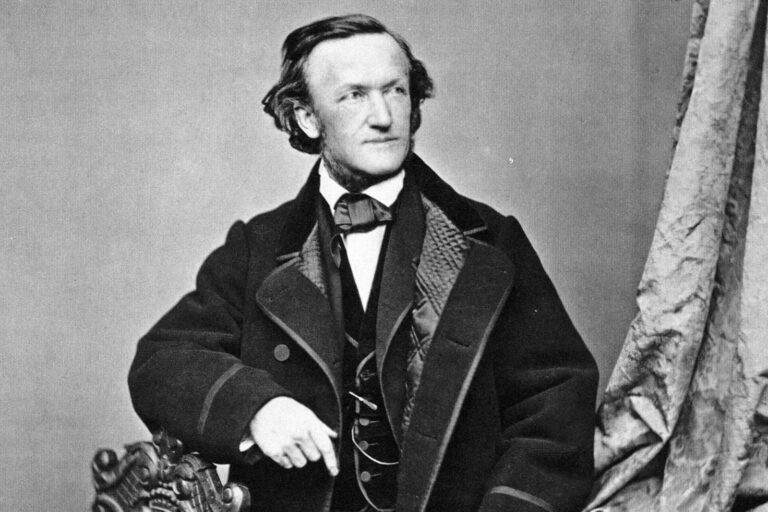
Richard Wagner · Romanticism
1813 – 1883
1850 · Opera · Weimar
Tonality
Without a unique tone. Like every opera, it goes through a lot of tonalities. The light prelude is in the largest and the famous Wedding March, in if bemol greater.
From the atril
When Lohengrin He was released in Weimar in 1850, under the guidance of his friend Franz Liszt, Wagner was unable to attend: he was exiled in Switzerland for his participation in the Dresden revolution. It was more than ten years before he could hear his own opera. It is the work that closes its youth stage and the one that contributed most to its fame in Europe.
Elsa de Brabante, falsely accused of killing his brother, is saved by a mysterious gentleman who arrives on a boat lying on a swan. She marries her on one condition: she must never ask her name or origin. The intrigues of the evil Ortrud sow the doubt in Elsa, which ends up asking the forbidden question. The prelude of the first act, with the violins divided into the most acute record, seems to come down from the sky like the Grail; it is one of the most ethereal music ever written. In contrast, the prelude to the third act is brilliant and festive, and follows the famous wedding choir, which still sounds at many weddings.
What to hear
- The ethereal prelude of the first act.
- The festive prelude of the third act.
- The wedding choir.

