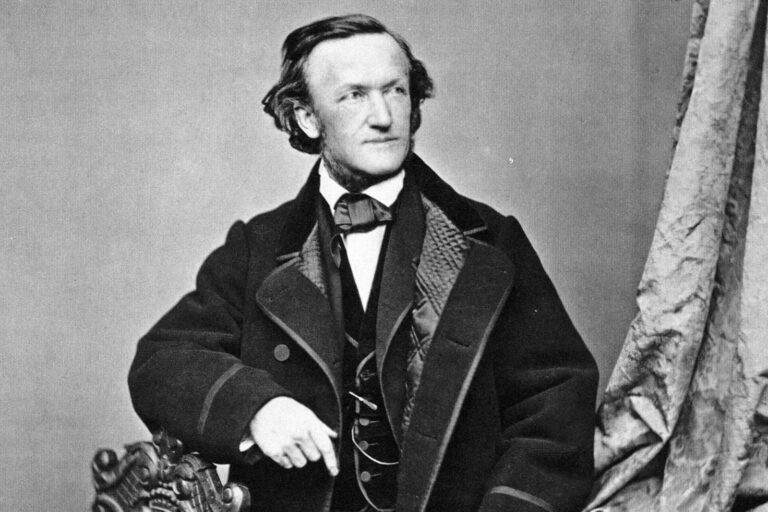
Richard Wagner · Romanticism
1813 – 1883
1843 · Opera · Dresden
Tonality
Without a unique tone. Like every opera, it goes through a lot of tonalities. The tormented overture begins in r minor and ends up in major.
From the atril
In 1839, running from his creditors, Wagner crossed from Riga to London. A terrible storm forced the ship to take refuge in a Norwegian fjord, and the echo of the sailors' cries between the rocks inspired it. The wandering Dutch, premiered in Dresden in 1843. It's the first opera Wagner finds his own voice in.
Legend tells the story of a captain condemned to sail the seas forever, who can only go down to the ground every seven years and will only be saved by the faithful love of a woman. Senta, daughter of a Norwegian sailor, is obsessed with his portrait and offers to save him, even sacrifice. The overture is an impressive orchestral tempest, with the theme of Dutch in the metals and of redemption in the winds. The Ballad of Senta, in which the legend counts, is the core of the work, and the chorus of sailors and yawns give color and life to the scene. The great themes of Wagner are already here: love, redemption and the sea.
What to hear
- The storm of the overture.
- Senta's ballad.
- The chorus of sailors and yawns.

