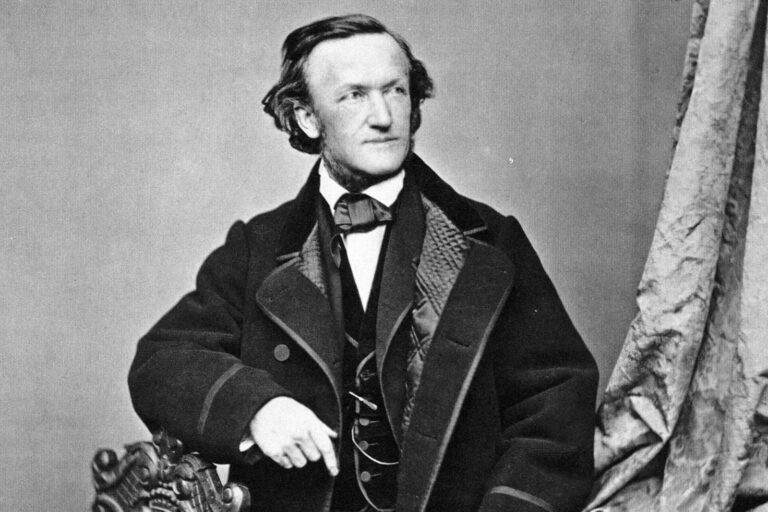
Richard Wagner · Romanticism
1813 – 1883
1865 · Music drama · Munich
Tonality
Without a unique tone. Its harmony, very chromatic, avoids for hours solving in a stable tone; the famous «Tristan chord» The prelude is the symbol of that endless longing. The work is closed in if greater.
From the atril
Wagner interrupted the composition of The ring of the nibelungo to write Tristan and Isoldainspired by his impossible love for Mathilde Wesendonck, the wife of his protector, and by Schopenhauer's philosophy. The work was considered unrepresentative for years, and was not released until 1865 in Munich, thanks to the support of King Louis II of Bavaria.
Tristan takes Isolda by sea to marry her to her uncle, King Marke, but a love filter unites them in a passion that can only be consumed in death. The first bars of the prelude contain the famous «Tristan chord», an ambiguous chord that does not resolve and creates a constant yearning; for many historians, it is the starting point of modern music. The whole work lives in that tension without resolution, which is only released in the «Death of love» (Liebestod) of Isolda, in the end, when the music finally reaches its rest. The long love duo of the second act is another summit. It is a work that transforms those who listen to it and that changed the history of harmony.
What to hear
- The «Tristan chord» of the prelude.
- The love duo of the second act.
- The «Death of love» Isolda.
Listen
Wagner - Tristan and Isolda (Barenboim, Ponnelle, 1983) Full Opera (Sub-Spanish) · Daniyyel Barrera
When you press the YouTube player will be loaded.

