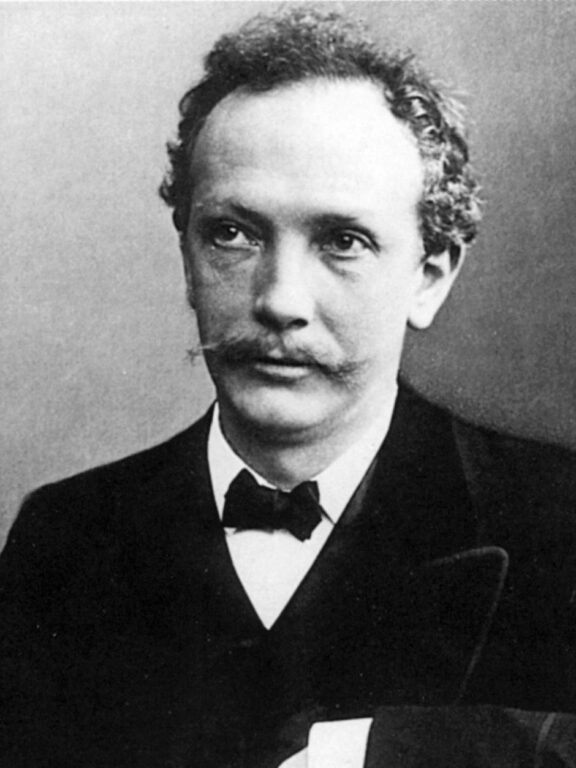
Richard Strauss · Romanticism
1864 – 1949
1905 · Opera · Dresden
Tonality
Without a unique tone. Like every opera, it goes through many tonalities, with a very chromatic and often dissonant harmony.
From the atril
Salome, premiered in Dresden in 1905, was a scandal and an overwhelming success at the same time. Strauss put music directly to Oscar Wilde's play, in German translation, on the biblical episode of Princess Salome, who asks King Herod for the head of the prophet John the Baptist (Jokanaan) after dancing for him. The censorship banned it in several cities, but the benefits allowed Strauss to build his villa in Garmisch.
The opera lasts less than two hours and develops in a single act of growing tension. The orchestra is huge and of an amazing color, with harmonies that bring Wagner's chromatism to the limit. The «Dance of the seven veils» is a large sensual and exotic orchestral number. But the culminating moment is the final monologue, in which Salome sings to the cut head of the prophet: a scene of a disturbing intensity that demands to the soprano a powerful voice capable of imposing on the orchestra and, at the same time, the appearance of a teenager. It is one of the most shocking operas of the 20th century.
What to hear
- The «Dance of the seven veils».
- Salome's final monologue.
- The orchestra's chromatic harmonies.

