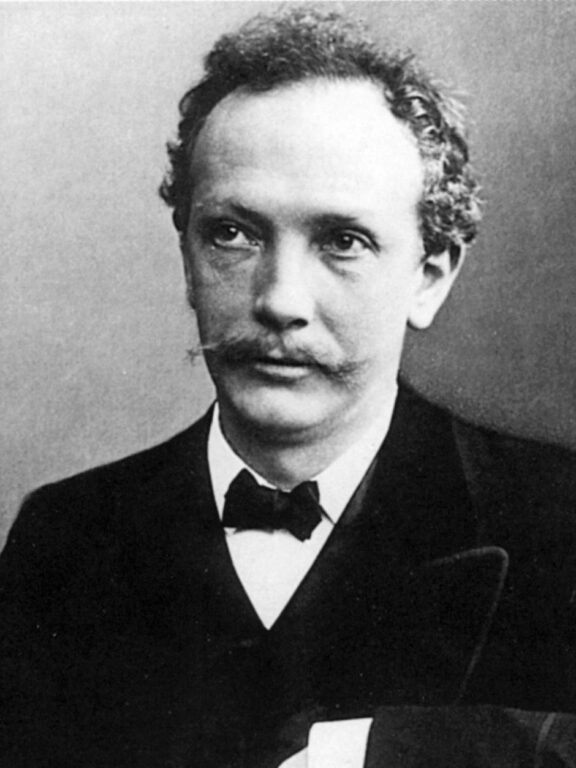
Richard Strauss · Romanticism
1864 – 1949
1896 · Symphonic poem · Frankfurt
Tonality
Do major, the tone of the famous initial dawn. The work ends in an ambiguous way, alternating major and if greater.
From the atril
This is how Zaratustra spoke., released in Frankfurt in 1896, is inspired by Friedrich Nietzsche's philosophical book. Strauss clarified that he did not mean to put music into philosophy, but to follow with sounds the evolution of the human being from its origins to the idea of the superman. The titles of the sections are taken from chapters of the book.
The beginning is one of the most famous in the history of music: on a serious note of the organ and the contrafagot, the trumpets touch three ascending notes, and the whole orchestra responds with an immense chord, like a cosmic dawn. Stanley Kubrick made it universal in 2001: a space odyssey. But the work continues for half an hour with very varied sections: a passage for the rope divided into many voices, a escape on a theme that uses the twelve notes, as an image of science, and an intoxicating Viennese waltz in the «Dance song». The end is suspended between two tonalities, as an unanswered question.
What to hear
- The initial dawn of trumpets and organ.
- The escape of «Science».
- The waltz of the «Dance song».
Listen
R. Strauss: Also spach Zarathustra, Op. 30: I. Prelude. Sonnenaufgang · Berliner Philharmoniker
When you press the YouTube player will be loaded.

