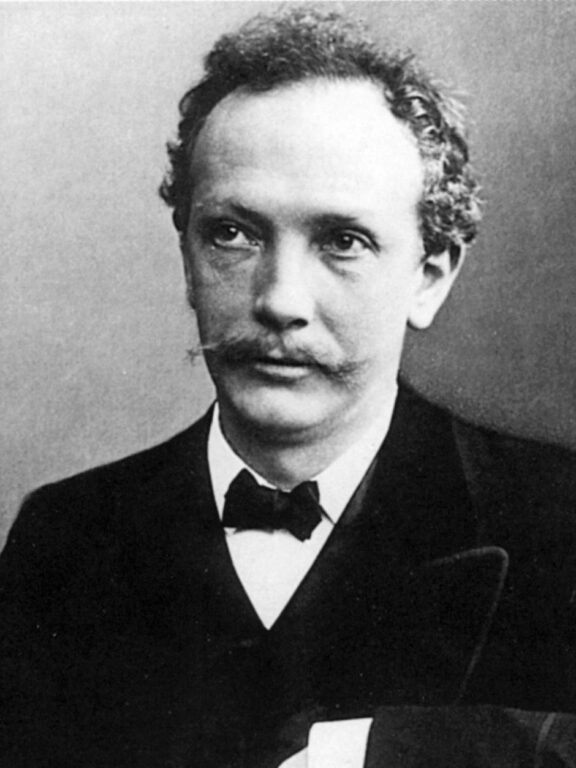
Richard Strauss · Romanticism
1864 – 1949
1909 · Opera · Dresden
Tonality
Without a unique tone. Like every opera, it goes through many tonalities, with a very chromatic and often dissonant harmony.
From the atril
Elektra, premiered in Dresden in 1909, was Strauss's first collaboration with the poet Hugo von Hofmannsthal, who adapted his version of the Sophocles tragedy for him. Electra, the daughter of King Agamenon, killed by his wife Clitemnestra and his lover, lives obsessed with revenge and awaits the return of his brother Orestes to fulfill it.
It is the most bold work of Strauss: a gigantic orchestra of more than a hundred musicians, dissonant harmonies that roar atonality and a tension that does not relax at any time of the single act. The opera begins with the motif of Agamenon, four tremendous notes that dominate everything. The scene between Electra and her mother, tormented by nightmares, is a shocking psychological portrait, and the recognition of Orestes, instead, a moment of unexpected tenderness. In the end, when the revenge was done, Electra dances to death. The leading role is one of the most exhausting of the soprano repertoire: almost always on stage, always at the limit.
What to hear
- The initial motive of Agamenon.
- The scene between Electra and Clitemnestra.
- The Orestes recognition.
Listen
'Elektra (Op.58) 'by R. Strauss (Audio + Sheet Music) · tomekkobialka
When you press the YouTube player will be loaded.

