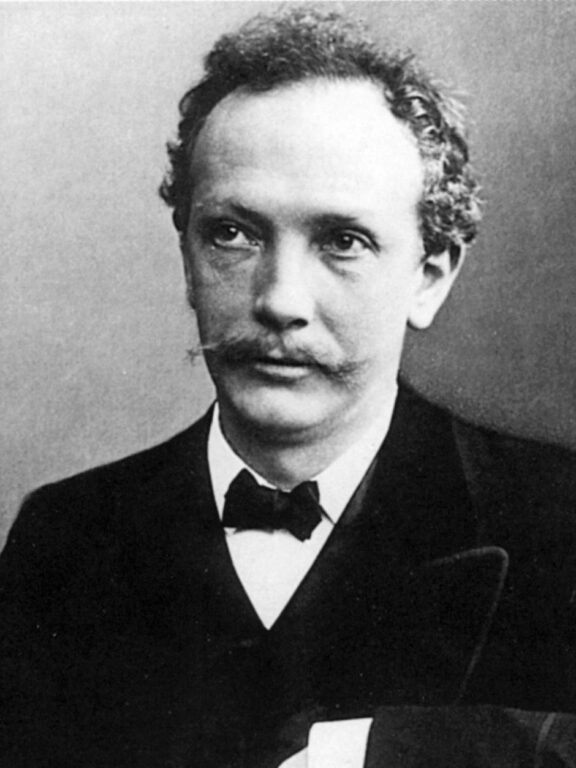
Richard Strauss · Romanticism
1864 – 1949
1911 · Opera · Dresden
Tonality
Without a unique tone. Like every opera, it goes through many tonalities along its arias, sets and waltz.
From the atril
After the violence of Elektra, Strauss and Hofmannthal surprised everyone with a comedy: Der Rosenkavalier, premiered in Dresden in 1911, with such success that special trains were organized from Berlin to see it. The action takes place in the aristocratic Vienna of the 18th century, in the time of empress Maria Teresa, although the music is full of waltz, a deliberate and charming anachronism.
I can INTEREST you.

The Mariscala, a mature and lucid lady, has a young lover, Octavian, paper sung by a mezzosoprano. His cousin, the rude Baron Ochs, asks a gentleman to bring the traditional silver rose to his fiancée, young Sophie, and the Mariscala sends Octavian, who falls in love with Sophie as soon as she sees her. The scene of the presentation of the rose, with its scintillating chords of celesta, flutes and harps, is pure magic. But the heart of the opera is the Mariscala, which with melancholy accepts the passage of time and renounces Octavian. The final trio of the three female voices is one of the most beautiful pages of the entire opera.
What to hear
- The presentation of the silver rose.
- The valleys of Baron Ochs.
- The final trio of the three female voices.

