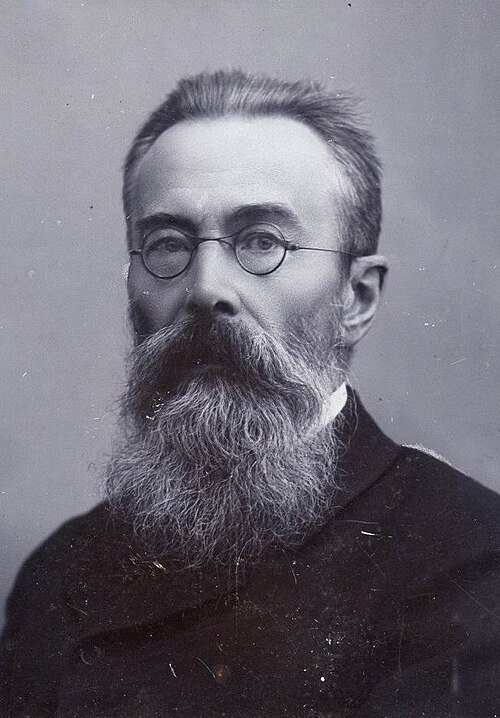
Nikolai Rimski-Korsakov · Romanticism
1844 – 1908
1900 · Opera · Moscow
Tonality
No fixed tone. Its rapid chromatic line imitates the buzz of the insect and there are versions in many shades.
From the atril
The fly of the moscardon is probably the best known piece of Rimski-Korsakov, although many do not know it is a short orchestral interlude of an opera: Tsar Saltan's storybased on a Pushkin verse story and premiered in Moscow in 1900. In history, Prince Gvidon, separated from his father by the intrigues of his aunts, is transformed into a moscardon by Princess Cisne to fly to the court of the Tsar and, by the way, to bite his evil aunts.
The music imitates the buzz of the insect with an incessant line of chromatic semicorcheas that go up, down and round in spiral, while the orchestra accompanies with quick strokes. It lasts just over a minute, but it requires absolute agility and regularity. Its success has been such that it has been arranged for virtually all instruments: violin, piano, flute, trumpet, tuba, guitar and even xylophone, and has become a speed test for virtuous of all kinds. Hearing it in its original context, within the opera, returns its narrative grace.
What to hear
- The chromatic semicorcheas that imitate the buzzing.
- The original version inside the opera.
- Arrangements for violin, piano or trumpet.
Listen
Rimsky-Korsakov: Scheherazade op.35 - Leif Segerstam - Symphony of Galicia · SynphonicadeGalicia
When you press the YouTube player will be loaded.

