Today 24 / 11 was born
- Mikhail Glinka · 1804, 222 years ago
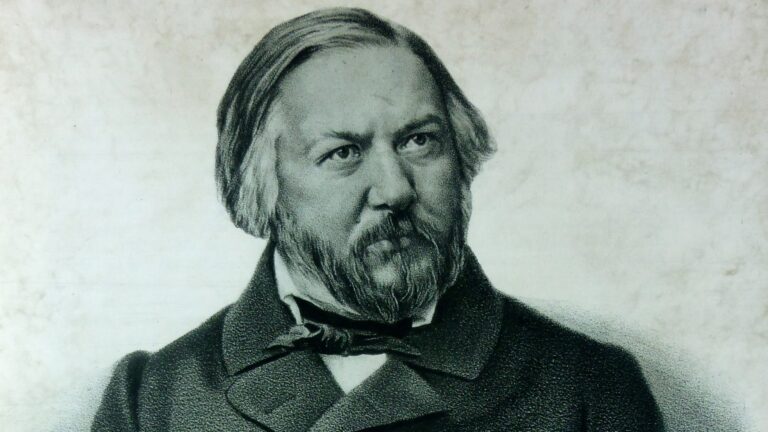
Romanticism · Russia
1804 – 1857
Novospáskoye - Berlin
Review
After training in Italy and Berlin, he premiered in 1836 A Life for the Tsar, considered the first Russian national opera. His language, which is part of Russian popular song, marked all subsequent Russian composers.
Between 1845 and 1847 he lived in Spain, especially in Madrid and Granada, collecting popular melodies. From that journey were born its two Spanish Obertures, including the famous Aragonese Jota.
He grew up on the Smolensk family estate, where he listened to his uncle's orchestra of servants and the songs of the peasants. He worked for a few years as an official in St. Petersburg, in the Pushkin environment and other writers, and in Berlin he studied composition with Siegfried Dehn. He was a tireless, sensitive traveler, and died in Berlin in 1857; his remains were then moved to St. Petersburg.
He is considered the father of Russian classical music: Chaikovski said that the entire Russian school was contained in his Kamárinskaya, «like oak in the acorn». His popular melodies, his luminous orchestration and his Spanish evocations opened a path that followed the Group of Five and many others. These are his main works:
I can INTEREST you.

Listen to it live
Next concerts with works by Mijail Glinka in Spain

