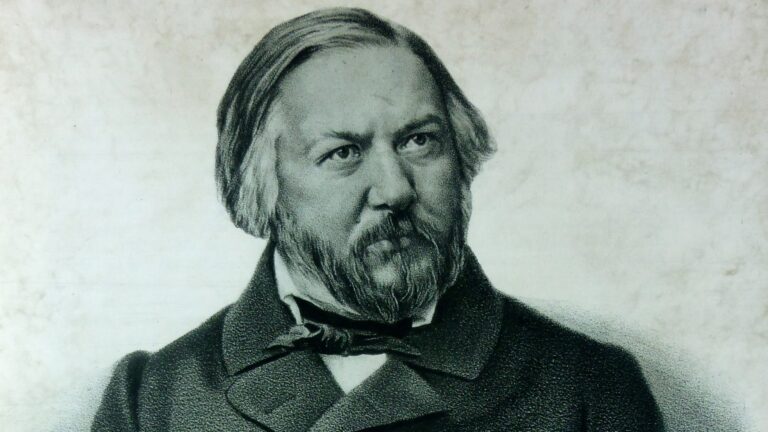
Mijail Glinka · Romanticism
1804 – 1857
1836 · Opera · Saint Petersburg
Tonality
Without a unique tone. Like every opera, it goes through many tonalities along its aryan, chorus and scenes.
From the atril
A life for the Tsar, released in St. Petersburg in 1836, is considered the first Russian national opera. Until then, the opera in Russia was Italian or French; Glinka wanted to create a work that sounded Russian, inspired by popular singing and the history of the country. After the 1917 Revolution, it was represented with its original title, Ivan Susaninand a modified notebook.
The story is located in 1613: the peasant Ivan Susanin deceives a detachment of Polish soldiers who seek the young Tsar, and leads them to the depths of a snow forest, where they kill him when they discover the trap, but the Tsar is saved. Glinka contrasts two musical worlds: the Russians sing melodies of popular air, while the Poles are characterized by national dances such as poloness and mazurca, which shine in the famous Polish act. Susanin's aria in the forest, when he faces his death, is one of the great pages for bass of the Russian repertoire, and the final chorus, «Slavsya»It's a great anthem.
What to hear
- The dances of the Polish act.
- Susanin's aria in the woods.
- The final choir «Slavsya».

