Romanticism · Germany and Austria
1838 – 1920
Cologne - Berlin
Review
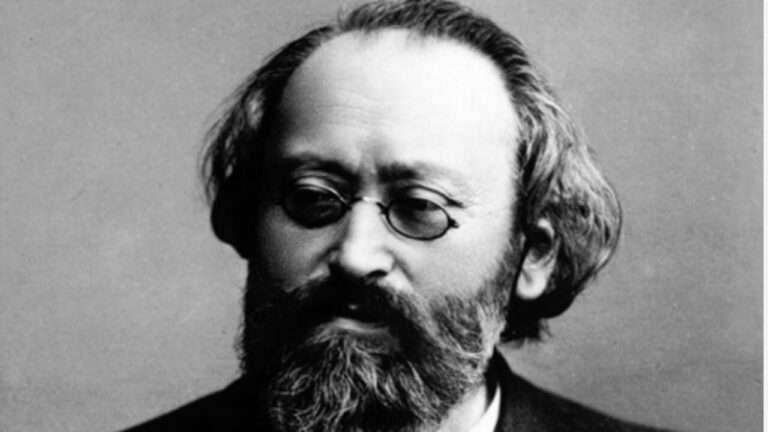
Born in Cologne, he received the first music lessons from his mother, who was a singer. He was an early child who made up from the age of nine, and at the age of 14 he won a scholarship from the Mozart Foundation of Frankfurt that allowed him to study with Ferdinand Hiller. Very young he had already released his own works, including his first opera.
His career was that of a traveling musician. He was musical director in Coblenza and chapel master in Sondershausen, and years later he led the Liverpool Philharmonic Society and the Breslau orchestra. In Coblenza he released the first version of his violin concert No. 1, and in Liverpool he wrote Kol Nidrei. From 1890 to 1910 he taught composition at the Academy of the Arts in Berlin, where he had among his students Ottorino Respighi and Ralph Vaughan Williams.
In life it was famous mainly for its great choral works, such as Frithjof or the Odysseus oratorio, much sung by German choral societies. Faithful to the tradition of Mendelssohn and Schumann, he defended the clear melody and the classic forms and remained out of the novelties of Wagner and Liszt, which made him considered an old-fashioned composer at the end of his life.
Posterity reminds him, on the other hand, by his writing for string instruments, and above all by the Concert for violin No. 1, that he eclipsed everything else for his own disgust. He died in Berlin in 1920, with economic difficulties. Years later, the Nazi regime banned his music by believing him to be Jewish by Kol Nidrei, although he was Protestant. Today his works for violin, cello and clarinet are part of the usual repertoire.

