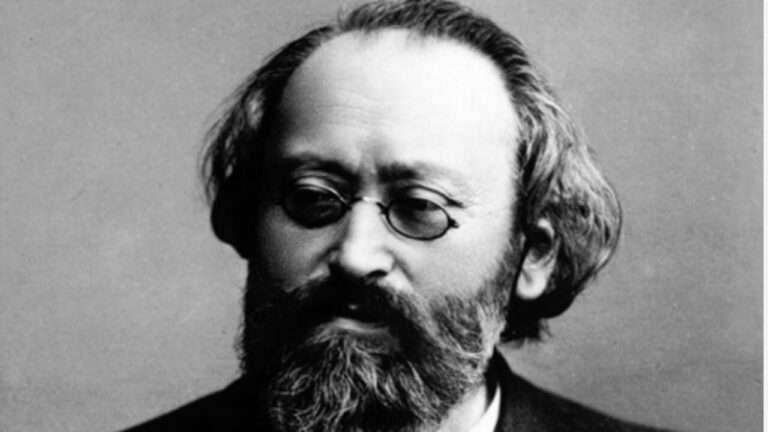
Max Bruch · Romanticism
1838 – 1920
1881 · Cello and orchestra · Liverpool
Tonality
Minor re, with a second part that is illuminated in major.
Instruments
- Sole cello
- Arp
- Wood, metals and timbals
- Row
From the atril
As he led the Liverpool Philharmonic Society, Bruch wrote this work for the Jewish community of the city. He was not Jewish, but Protestant, but was fascinated by the traditional Hebrew melodies. The piece is based on two of them: the song of the Kol Nidrei, the prayer that opens on the eve of the Yom Kipur, and a melody of the Hebrew Melodies on Byron's poems.
Although it carries the subtitle of adagio, it is rather a meditation in two parts. In the first, the cello sings prayer with a serious and collected tone, like the voice of a singer in the synagogue. In the second, the music opens to a warm and comforting melody, accompanied by the harp. It is one of the most beloved works of the cello repertoire, and its difficulty is not in virtuosism but in holding a long line with a noble sound and without affection.
What to hear
- The cello entrance with the Kol Nidrei song.
- The major re step and the comforting melody.
- The harp arpegios that accompany the second part.
Listen
Max Bruch - Kol Nidrei, Op. 47 (Mischa Maisky, Yuri Temirkanov) · EuroArtsChannel
When you press the YouTube player will be loaded.

