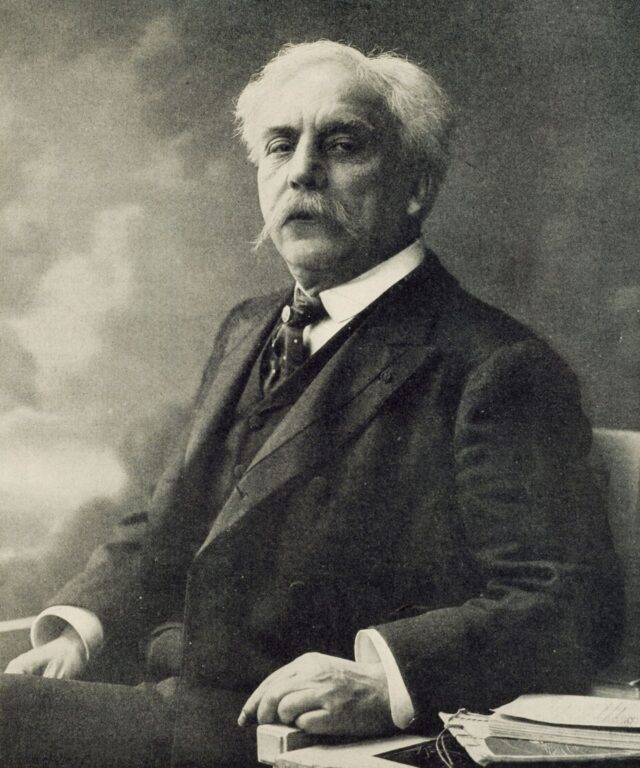
Gabriel Fauré · Romanticism
1845 – 1924
1887 · Orchestra, optional chorus · Paris
Tonality
From the atril
Fauré wrote his Pavana in 1887 as a short orchestral piece, and shortly thereafter, at the request of Countess Greffulhe, her patron, added an optional chorus with light verses and somewhat mockery by Robert de Montesquiou on the love games of some gallant characters. The pavana evokes an old courtesan dance with a slow pace.
I can INTEREST you.

All the charm is in the melody of the flute, which floats over a pizzicate of strings that marks the passage of the dance. It is an elegant melancholy music, with harmonies that slide gently and an air of nostalgia for an idealized ancient time. For the flautista it is a famous single that asks for round sound and without haste rubbing; for the orchestra, a lesson of lightness. It has been versed infinitely, from jazz to pop.
What to hear
- The flute melody on the pizzicate.
- The slow step of the old dance.
- The choir version of Montesquiou.

