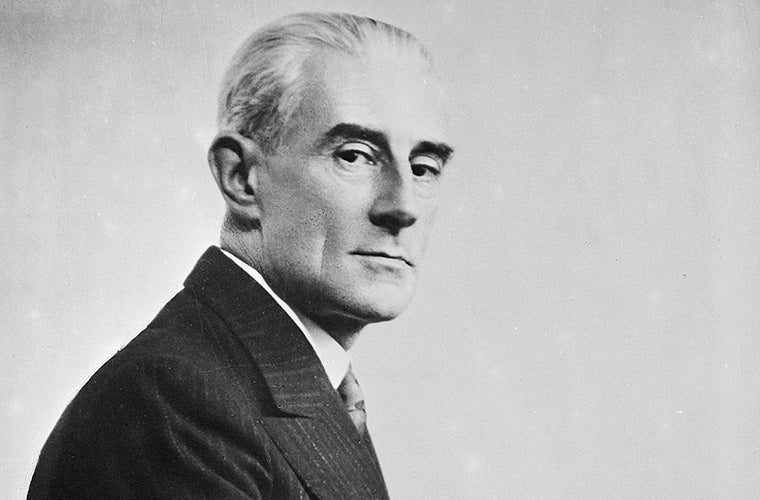
Maurice Ravel · Impressionism
1875 – 1937
1928 · Ballet · Paris, Opera
Tonality
Do major from beginning to end, except a single and surprising turn to My major just before the end.
From the atril
The Boléro was commissioned by the dancer Ida Rubinstein, who wanted a ballet of Spanish atmosphere. It premiered at the Paris Opera in 1928 and became a global phenomenon that Ravel himself looked at with some irony: he described it as an experiment, «a piece for orchestra without music»And he was surprised that he was so successful.
The idea is a radical simplicity: for about 15 minutes, on a bolero rhythm that the box repeats without rest from beginning to end, two melodies alternate again and again, always in the same tone, changing only from instrument. The flute begins almost inaudible, follow the clarinet, the fagot in its most acute record, the refifth, the oboe d'amore, the saxophone, the celesta with the tubes... and the orchestra is growing in a single and immense crescendo. Only in the end the music changes sharply of tone and collapses. For the percussionist of the box is a nerve test; for each soloist, a moment of maximum exposure.
What to hear
- The relentless rhythm of the box.
- The successive soles of each instrument.
- The change of tone of the end.

