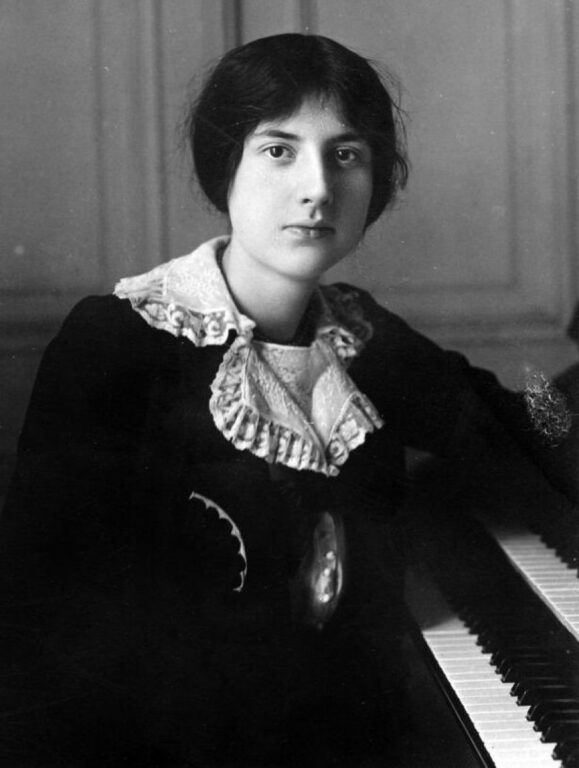
Lili Boulanger · Impressionism
1893 – 1918
1913 · Cantata · Paris, Prix de Rome
Tonality
Without a unique tone. It is a cantata and runs through several tonalities throughout its scenes.
From the atril
With Faust et HélèneLili Boulanger became the first woman to win the Rome Prix of composition, the most prestigious prize in France, in 1913. His sister Nadia had tried unsuccessfully. The cantata was the final test of the competition: the candidates had to make it in a few weeks, isolated, on a text imposed.
The text, inspired by the Faust de Goethe, narrates how Fausto, with the help of Mefistopheles, evokes the beautiful Helena of Troy and falls in love with her, until the appearance fades away. For mezzosoprano, tenor, baritone and orchestra, the work lasts a half hour and shows an amazing mastery of the orchestra and drama: mysterious atmospheres, a loving duo of great lyrism and an end of great intensity. The harmonies remind Debussy and Fauré, but with a very personal passion. The premiere was a clamorous success and the work was published immediately.
What to hear
- The mysterious atmosphere of Helena's evocation.
- The loving duo of Fausto and Helena.
- The intense end, when the appearance fades.

