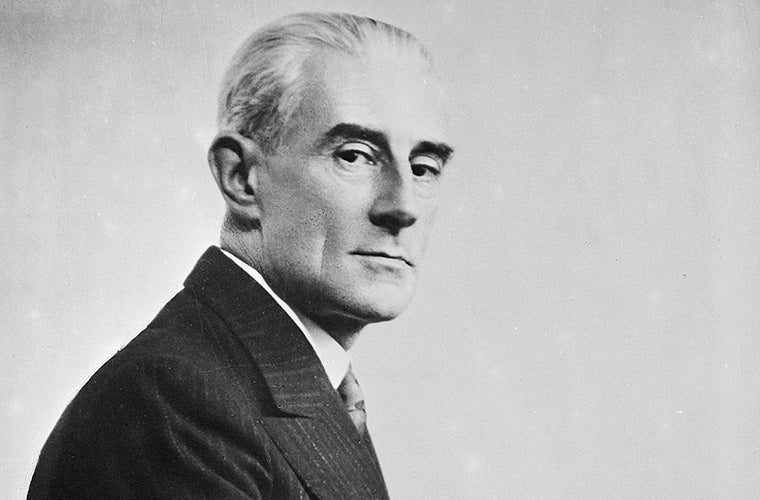
Maurice Ravel · Impressionism
1875 – 1937
1920 · Choreographic poem · Paris
Tonality
No tonality indicated in the title. It links several waltz that cross different tonalities to a chaotic end.
From the atril
The fence was born from a Diáguilev commission for the Russian Ballets, but when Ravel touched it on the piano, the entrepreneur told him it was a masterpiece, but not a ballet, but a portrait of a ballet. Offset, Ravel broke up with him. The work was released in concert in 1920 and today is one of its most played orchestral pieces.
Ravel defined it as a «choreographic poem» and an apotheosis of the Viennese waltz. It begins in the dark, with a murmur of contrabajos from which fragments of waltz are emerging, as if a cloud were dissipated and an imperial ballroom appeared gradually around 1855. The waltz are carried out with an intoxicating elegance, but something begins to twist: the harmonies are distorted, the rhythms are broken, the orchestra accelerates in an increasingly violent whirlpool, until a catastrophic end. Many hear it as the end of old Europe after World War I. For the orchestra it is a whirlwind of virtuosism and control of dynamics.
What to hear
- The initial murmur of the contraband.
- The intoxicating elegance of the waltz.
- Disintegration and the catastrophic end.

