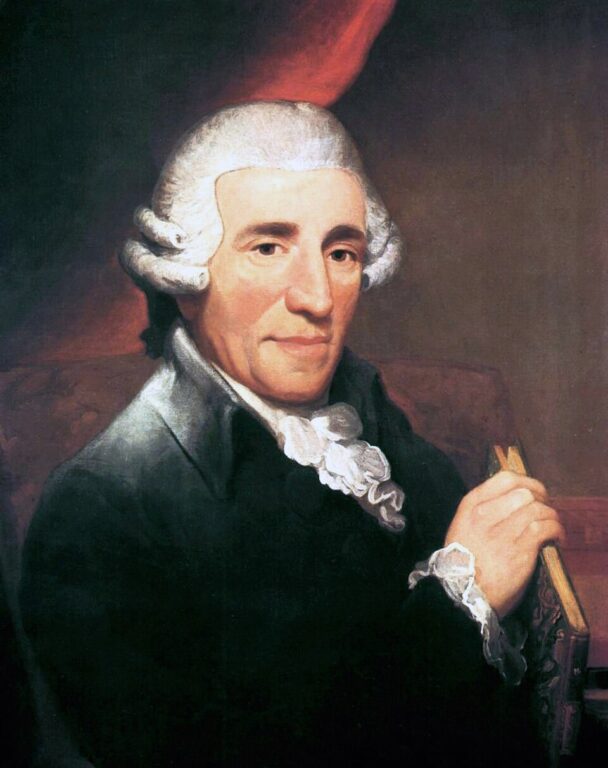
Joseph Haydn · Classification
1732 – 1809
1795 · Symphony · London
Tonality
Majorafter a slow introduction into r minor.
Instruments
- 2 flutes
- 2 oboes
- 2 clarings
- 2 fages
- 2 tubes
- 2 trumpets and timbals
- Rope (violins, violas, cello and contrabajes)
From the atril
The Symphony No. 104 is the last of Haydn's one hundred and four symphonies, and the one that is called by anthonomasia «London». It premiered in 1795, in a concert for the benefit of the composer, which noted in his diary with satisfaction the huge collection. It is the culmination of a lifetime dedicated to symphony.
It begins with a slow introduction in a minor, solemn and almost tragic re, built on an empty fifth call that impresses by its gravity. The next parallel is bright and of a master development. The walking man alternates serenity and dramatic outbursts, the minuet is robust, and the end is based on a popular air melody, perhaps a Croatian song or a London prepondera, on a gaita bass. It is a symphony that already looks at Beethoven, written by a composer in full possession of his art.
What to hear
- The solemn introduction in the minor re.
- The walking's dramatic outbursts.
- The popular theme of the end on a gaita bass.

