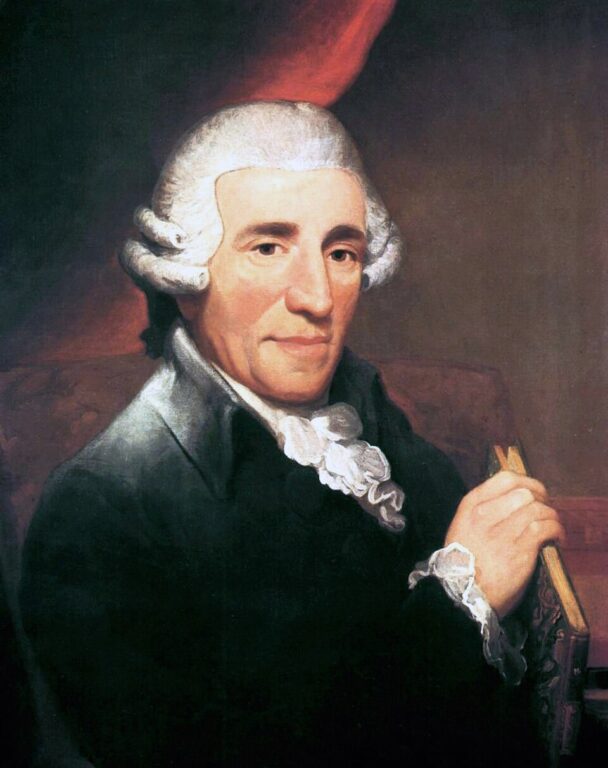
Joseph Haydn · Classification
1732 – 1809
1797 · String Quartet · Vienna
Tonality
Without a unique tone. There are six quarters: 1 in major sun, No. 2 in r minor («Quintes»), No. 3 in major («Emperor»), No. 4 in if bemol greater («Dawn»), No. 5 in major and No. 6 in My biggest bemol.
Instruments
- 2 violins
- Viola
- Cello
From the atril
The six quarters op. 76, written in 1797 for Count Erdődy, are the top of Haydn's string quartet, the genre he himself had invented and perfected for four decades. Each has a very marked personality, and several have a nickname: «The fifths», «The Emperor», «Dawn».
The most famous is # 3, «The Emperor»whose second movement is a subject with variations on the anthem that Haydn had composed for Emperor Francis II, «Gott erhalte Franz den Kaiser»whose melody is today the anthem of Germany. The theme goes through the four instruments, each with its variation, while the others surround it with counterpoint. In «The fifths» the first movement is built whole on a motive of descending fifths, and its minuet is a severe canon nicknamed «the minute of witches». For a quartet, playing op. 76 is learning the essentials of the trade.
What to hear
- The variations over the anthem in «The Emperor».
- The «minutes of witches» of «The fifths».
- The bright beginning of «Dawn».

