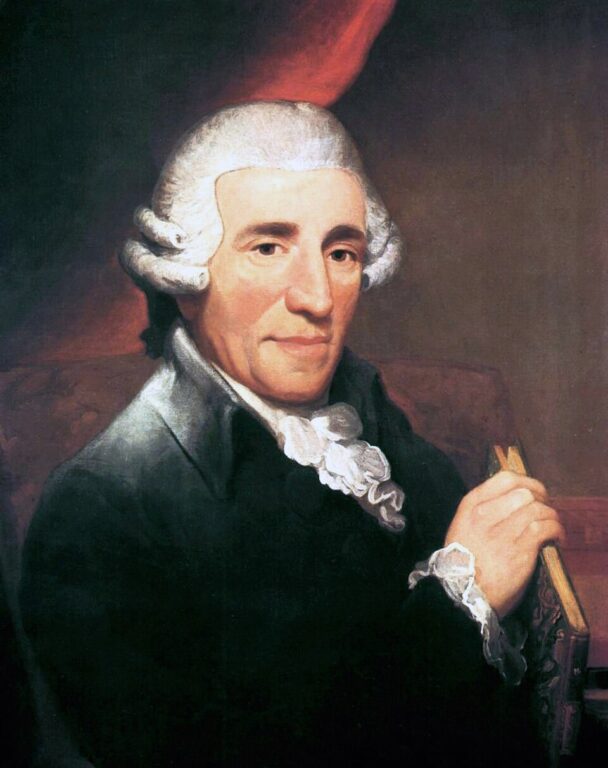
Joseph Haydn · Classification
1732 – 1809
1786 · Orchestra · Head of Cadiz
Tonality
Without a unique tone. The introduction is in r minoreach of the seven sonatas has its own tonality and the «Earthquake» end is in minor.
Instruments
- Original version (1786), for orchestra: 2 flutes, 2 oboes, 2 fages, 4 tubes, 2 trumpets, timbals and rope
- Version for string quartet (1787)
- Piano version, approved by Haydn (1787)
- Version as an oratory, with chorus and soloists (1796)
From the atril
This work has a close relationship with Spain: it was a commission of the co-fradia of the Santa Cueva de Cadiz for the trade of Good Friday. At that ceremony, the bishop pronounced one by one the last seven sentences of Christ on the cross and commented each, and among them the orchestra played a musical meditation. Haydn wrote seven adagios, preceded by an introduction and followed by a «earthquake» end.
The challenge, as he himself recognized, was to write seven slow movements in a row without tired the listener. It does so with an extraordinary variety of tones, colors and characters: there is supplication, comfort, anguish and serenity. Each adagio is based on the rhythm of the corresponding Latin phrase, as if the orchestra pronounced it. The final earthquake, very fast and very massive, is an explosion after so much recollection. Haydn also made versions for string quartet, piano and as an oratory, and the quartet is today the most interpreted.
What to hear
- The variety of colors between the seven adagios.
- The rhythm of Latin phrases in melodies.
- The final earthquake.

