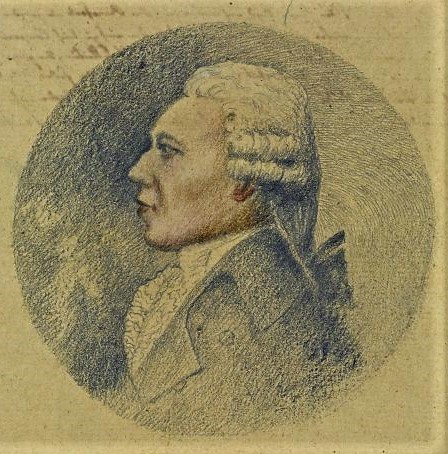
Classification · Mannheim School
1745 – 1801
Mannheim - Jena
Review
Son of a Johann StamitzHe was born in Mannheim in 1745 and grew up in the heart of Europe's most admired orchestra. His father died when he was only 11 years old, and his formation continued with the palatine court teachers, among them Christian Cannabich, Ignaz Holzbauer and Franz Xaver Richter. Very young he entered as a violinist in Mannheim's own orchestra, where he learned from within the discipline, dynamic contrasts and instrumental refinement that had made the school famous.
By 1770 he left Mannheim for Paris, where he worked at the service of the Duke of Noailles and presented himself successfully at the Concert Spirituel, the great public concert room of the city. From there he led a life of virtuous itinerant of the violin, viola and viola d'amore: London, The Hague, Hamburg, Berlin, Prague, Dresden and many other cities saw him play and direct his own works. That traveling existence gave him international fame, although never the stability of a fixed courtesan post.
As a composer he was extraordinarily prolific: more than fifty symphonies, dozens of concerts for many different instruments and abundant camera music. He was particularly prominent in the concerting symphony, the genre for several soloists and orchestra that made furor in Paris, and of which he was one of its most important cultivators. Its writing is bright, elegant and generous with the soloist, with canable melodies and a virtuous glow that never becomes free. His clarinet concerts, written largely for the great clarinetist Joseph Beer, are among the first great contributions to the instrument's repertoire.
In the 1790s he settled in Jena, where he served as a professor of music at the university until his death in 1801, in a modest economic situation. During the 19th century his name was overshadowed by Haydn and Mozart, but today his music again occupies a place of its own: the Concert for Viola op. 1 is a forced piece in orchestra auditions around the world, and his concerts for clarinet and flute are often heard in concert and in record. Carl Stamitz represents the second generation of Mannheim, which brought the style of the school to the capitals of Europe.
I can INTEREST you.


