Today 24 / 11 was born
- Carl Philipp Emanuel Bach · 1714, 312 years ago
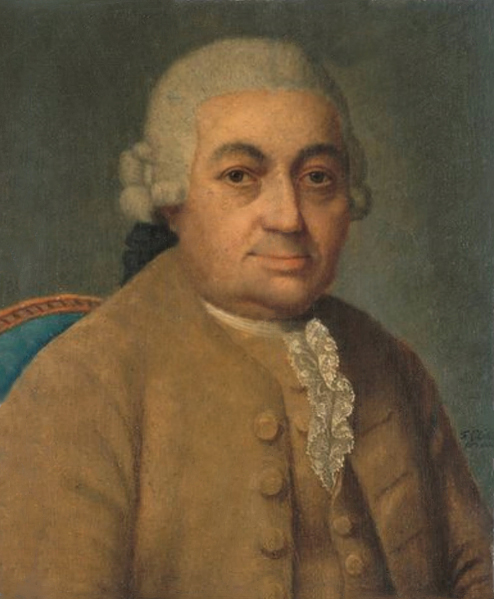
Classification · German and Austrian area
1714 – 1788
Weimar - Hamburg
Review
The second surviving son of Johann Sebastian Bach, was for almost thirty years a carnation of Federico the Great of Prussia in Berlin and Potsdam. In 1768 he succeeded his best man Telemann as musical director of the churches of Hamburg, where he spent the rest of his life.
His music, full of unexpected turns and emotional contrasts, is the highest example of the Empfindsamkeit. His treatise on the art of playing the keyboard was the reference of an entire generation: Haydn studied it in depth and Mozart was attributed the phrase that he was «the father, and we the children».
He studied law in Leipzig and Frankfurt of the Oder before entering the service of Federico el Grande, who was a flautist and had conservative tastes; Carl Philipp accompanied the king to the key in his camera concerts. In Hamburg he finally found freedom: he organized public concerts, wrote music for the churches and was an admired character in the cultural life of the city. In his time, when he talked about «Big Bach»They meant him.
His preferred instrument was the carnation, capable of very subtle nuances, and for him he wrote free fantasies full of silence, abrupt modulations and mood changes. This sensitive and surprising style is a bridge between his father's Baroque and the Haydn and Mozart Classicism. These are his main works:
I can INTEREST you.

Main works
- Prussian Sonatas Wq 48 (1742 - 28 years old)
- Württemberg Wq 49 Sonatas (1744 - 30 years old)
- Magnificat Wq 215 (1749 - 35 years old)
- Test on the true art of playing the keyboard (1753-1762 - 39-48 years)
- Concert for cello in major Wq 172
- Hamburg Soundbooks Wq 182 (1773 - 59 years old)
- Sonatas «für Kenner und Liebhaber» (1779-1787 - 65-73 years old)
- Fantasy in a sustained minor Wq 67 (1787 - 73 years old)

