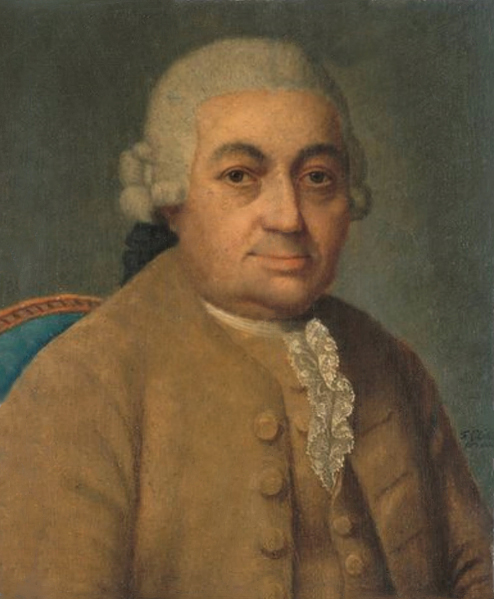
Carl Philipp Emanuel Bach · Classification
1714 – 1788
1749 · Solists, chorus and orchestra · Berlin / Leipzig
Tonality
Major, the brilliant tone of the trumpets. The intermediate numbers go through other tonalities.
Instruments
- 3 trumpets and timbals
- 2 flutes
- 2 oboes
- Rope (violins, violes and low)
- Continuous low
From the atril
It is the first great vocal work by Carl Philipp Emanuel, written in 1749, when his father still lived. It has been suggested that he could present it in Leipzig as a letter of candidacy to succeed Johann Sebastian as a singer of St. Thomas, since he did not finally get it. The work has, in fact, a double face: it looks to the father and to the future.
From the orchestra you can see immediately the relationship with his father's Magnificat: the same tone of re major, trumpets and bright timbals, a jubilous initial chorus. But the Aryan are already from another world, with gallant melodies, of almost operational style, far from the Baroque. And the end, Sicut erat in principle, is a double monumental escape that shows that the son dominated the counterpoint as well as the father. A fascinating work of transition.
What to hear
- The initial chorus, with trumpets and timbals.
- The beautiful-style Aryans.
- The great final escape, tribute to your father's school.
Listen
C. P. E. Bach: Magnificat Wq 215 (1779) | CPE-Bach-Academy Hamburg | Hansjörg Albrecht · Carl-Philipp-Emanuel-Bach-Academy Hamburg
When you press the YouTube player will be loaded.

