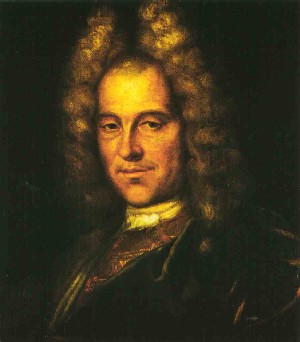
Baroque · Germany and Central Europe
1660 – 1741
Hirtenfeld (Styria) - Vienna
Review
Master of Imperial chapel in Vienna at the service of three emperors, was the highest musical authority of the Habsburg court.
His counterpoint treaty Gradus ad Parnassum (1725) was the composition manual of Haydn, Mozart and Beethoven and is still being studied. He was a teacher of Zelenka and Wagenseil.
Son of stellar peasants, studied with the Jesuits in Graz and Ingolstadt, where he was an organist. He was a chapel teacher of the Cathedral of St. Stephen and, since 1715, of the imperial court, at the service of Leopold I, Joseph I and Charles VI. Under its direction the Viennese chapel lived a stage of splendor, with operas of great apparatus for the celebrations of the court.
His music combines the severe counterpoint of the Palestrina tradition with the pompa of the Imperial Baroque. He wrote about eighty misas, operas, oratoriums and instrumental music. His Gradus ad Parnassum, written as a dialogue between teacher and student, taught the counterpoint to entire generations. These are his main works:
I can INTEREST you.


