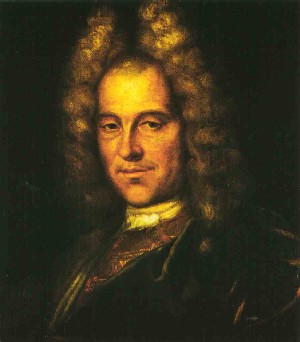
Johann Joseph Fux · Baroque
1660 – 1741
1725 · Counterpoint Treaty · Vienna
Tonality
It has no tonality: it is not a work to interpret, but a counterpoint treaty with exercises in different ways.
Instruments
- None in particular: it is a counterpoint treaty, with written exercises for voices.
From the atril
The Gradus ad Parnassum («up to Parnaso»), published in Latin in 1725 with funding from the Emperor Charles VI, is the most influential counterpoint treaty in history. Haydn studied him thoroughly as a young man, Mozart used him with his students and Beethoven worked with him. It is still taught in conservatories today.
It is written as a dialogue between a teacher, Aloysius, who represents Palestrina, and a student, Josephus, who is Fux himself. His great pedagogical invention is the counterpoint by species: the student learns to write one voice on another given step by step, first note against note, then two notes against one, four against one, with syncopates and finally with freedom. Each error is corrected and explained with patience. It is a lesson of rigour and ear that continues to work three hundred years later, and a surprisingly amena reading.
What to read (and listen)
- The dialogue between Aloysius and Josephus.
- The five species of the counterpoint.
- The Canon Missaas a practical example.
Listen
Johann Joseph Fux - Gradus ad Parnassum: Third Species Counterpoint (1 of 3) · Gradus ad Parnassum
When you press the YouTube player will be loaded.

